She Decoded the Wires — Then Decoded the Criminals Nobody Else Could Catch
The Woman Behind the Ticker Tape
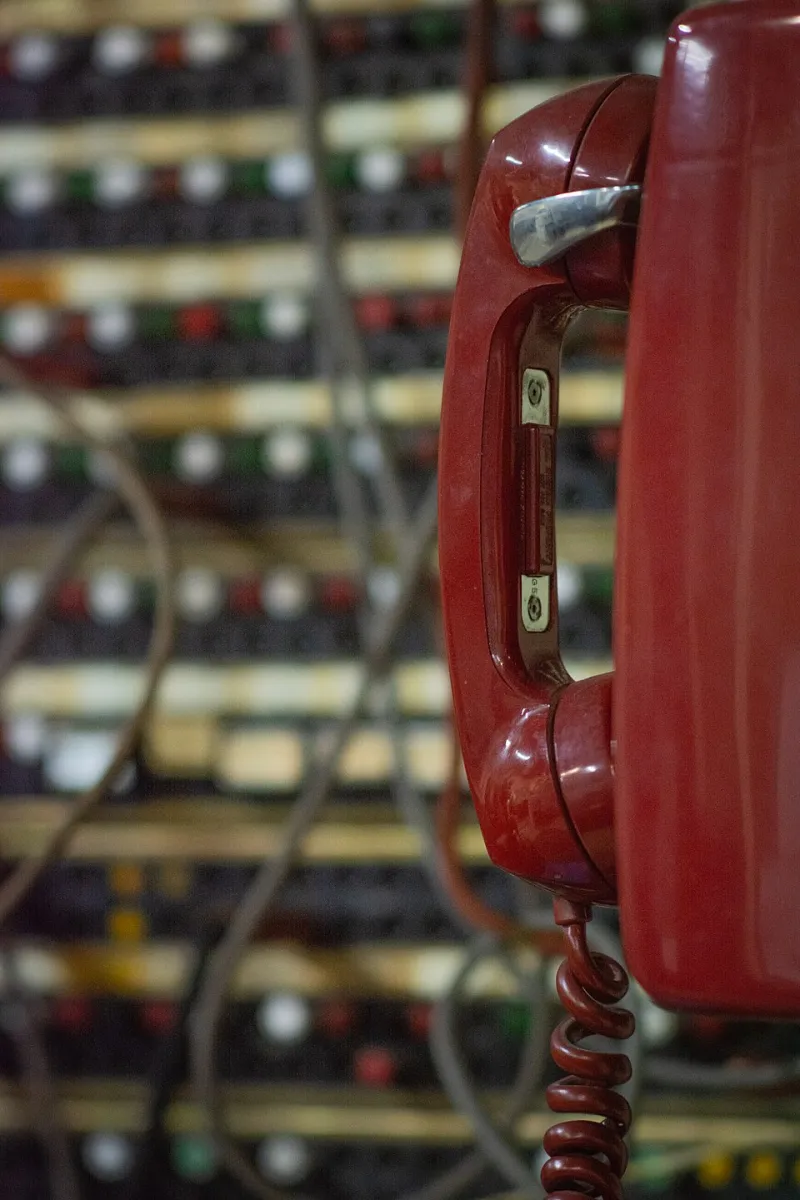
There's a particular kind of invisibility that comes with being useful. You sit at your station, you do your work, and the world flows around you like water around a stone — never stopping to wonder what the stone itself might be capable of. For a young woman working a telegraph desk in the early twentieth century, that invisibility was practically a job requirement.
She was fast. She was accurate. She could read Morse the way most people read headlines — instantly, without effort. Her supervisors were pleased. Her male colleagues were polite, in the way men are polite when they don't consider you a threat. And for a while, that was the whole story.
Except she was listening to a lot more than dots and dashes.
Telegraph operators in that era were the nervous system of American commerce and crime alike. Fraud schemes were coordinated over the wire. Stolen goods were tracked by telegram. Alibis were constructed and dismantled one message at a time. Sitting at that desk, day after day, she developed something that no law enforcement training program could have taught her: an instinct for when a message didn't quite add up.
Reading Between the Lines
The first time she flagged a suspicious transmission, her supervisor laughed it off. The second time, he told her to focus on her job. The third time, she went around him entirely — walked her findings to a private inquiry agency operating out of a nearby office building — and handed over a documented pattern of wire fraud that led to three arrests.
She wasn't hired on the spot. That would make for a tidier story. Instead, she was thanked, shown the door, and went back to her desk. But she'd made an impression. And in the world of private investigation — a field that was barely a generation old and still figuring out its own rules — impressions had a way of turning into opportunities.
Within eighteen months, she was conducting her first formal investigation, working as a contract operative for the agency she'd approached. Her cover was almost laughably perfect: a telegraph operator. She could sit inside businesses, inside hotels, inside the beating heart of communication networks, and nobody looked twice. Women at telegraph desks were furniture. That was her superpower.
The Techniques That Outlasted Her
What made her genuinely remarkable wasn't the undercover work, though she was extraordinarily good at it. It was the systematic approach she brought to evidence-gathering — an approach that looked less like the rough-and-tumble detective work of the era and more like what we'd now call forensic analysis.
She kept meticulous records. Cross-referenced witness accounts against physical evidence. Built timelines before timelines were standard practice. She understood, intuitively, that the most valuable evidence in any case wasn't the dramatic confession or the caught-in-the-act moment — it was the accumulation of small, verifiable facts that left a suspect no room to maneuver.
Her colleagues, most of them men with law enforcement backgrounds, thought this approach was fussy. Overcomplicated. The kind of thing a woman would think up because she didn't have the nerve for direct confrontation. They changed their minds when her cases started holding up in court in ways that theirs didn't.
Prosecutors noticed. Judges noticed. And slowly, the methodology she'd developed — patient, document-driven, built on cross-referencing rather than instinct alone — started filtering into how other investigators worked.
The Credit That Went Elsewhere
Here's where the story takes its familiar, frustrating turn. The techniques spread. The credit didn't.
In an era when female investigators were still considered a novelty — useful for certain undercover roles, perhaps, but not serious professionals — the intellectual contributions of women in the field had a way of getting absorbed into the general practice without attribution. Methods she pioneered were described in training manuals without her name attached. Cases she broke were written up with her male supervisors taking the headline.
She wasn't alone in this. The history of early American detective work is full of women who did the foundational labor while men collected the institutional recognition. But her particular erasure is striking because the techniques she developed were so clearly ahead of their time.
The cross-referencing methodology she used in the 1910s wouldn't become standard investigative practice for another two decades. The documentation protocols she insisted on — keeping original evidence separate from working copies, maintaining chain-of-custody records before that phrase even existed — are now so fundamental to forensic work that it's hard to imagine anyone had to invent them.
Someone did. She did.
What the Wires Taught Her
It's worth pausing on the telegraph desk for a moment, because that origin story matters more than it might seem. She didn't come to detective work through law enforcement, through family connections, or through the kind of privileged access that opened doors for most investigators of her era. She came through a technology job — a job that trained her to process information quickly, to look for signal within noise, to understand that the meaning of a message often had less to do with what was said than with what was conspicuously absent.
That's a remarkably modern way of thinking about evidence. And it came directly from her years of reading other people's communications for a living.
The telegraph office didn't just give her cover. It gave her a framework. A way of seeing the world as a network of messages, some of them honest and some of them not, and understanding that the investigator's job was essentially the same as the operator's: receive, decode, and make sense of what you're actually being told.
The Longer Arc
She retired quietly, as women of her era tended to do — no memoir, no lecture circuit, no testimonial dinner from a grateful profession. The agency she'd worked with closed eventually. The files from her cases scattered into archives and attics and, in some cases, simply disappeared.
But the work remained, embedded in practice if not in the record. Every investigator who builds a case document-by-document rather than confession-by-confession is working in a tradition she helped establish. Every forensic analyst who insists on chain-of-custody protocols is following a logic she worked out at a telegraph desk in an era when nobody expected her to be working anything out at all.
That's the thing about trailblazers who don't get their names in the history books. The trail is still there. You're still walking it. You just don't know whose hands cut it.