The Roads He Drew on Grocery Receipts Are the Ones You Drive on Today
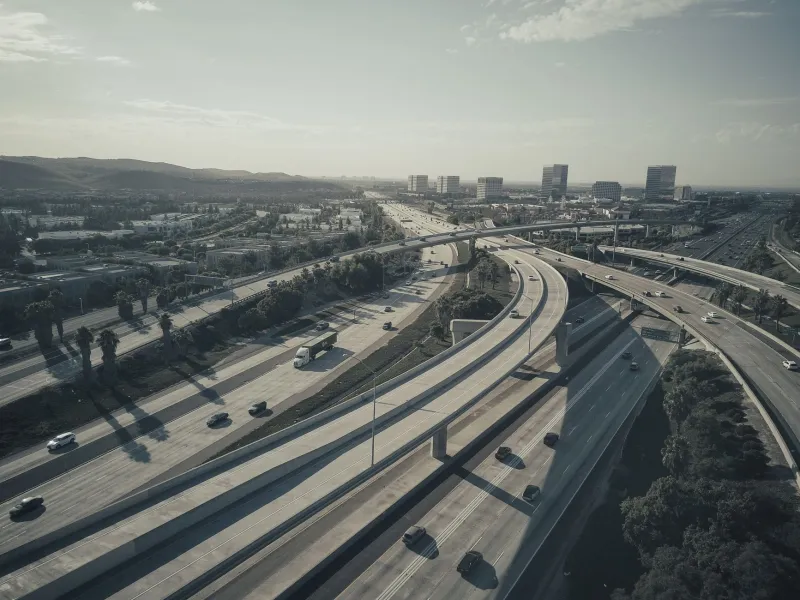
The next time you merge onto an interstate, take a second to notice the geometry of it. The long, gradual curve of the on-ramp. The way it feeds you smoothly into traffic without forcing a sharp angle. The way exits are spaced to give drivers enough time to react without panic. None of that happened by accident. And more of it than you might expect traces back to a man who got kicked out of engineering school and spent the better part of a decade being told he had no business thinking about roads.
His name was Calvin Pruett. He grew up in Wythe County, Virginia, the son of a hardware store owner who could fix anything with his hands and a mother who read constantly and made sure her children did too. Calvin inherited both tendencies — a mechanical intuition and an almost compulsive need to understand systems. What he struggled with was the formal architecture of academic engineering: the rigid problem sets, the memorization of formulas, the expectation that learning moved in a straight line.
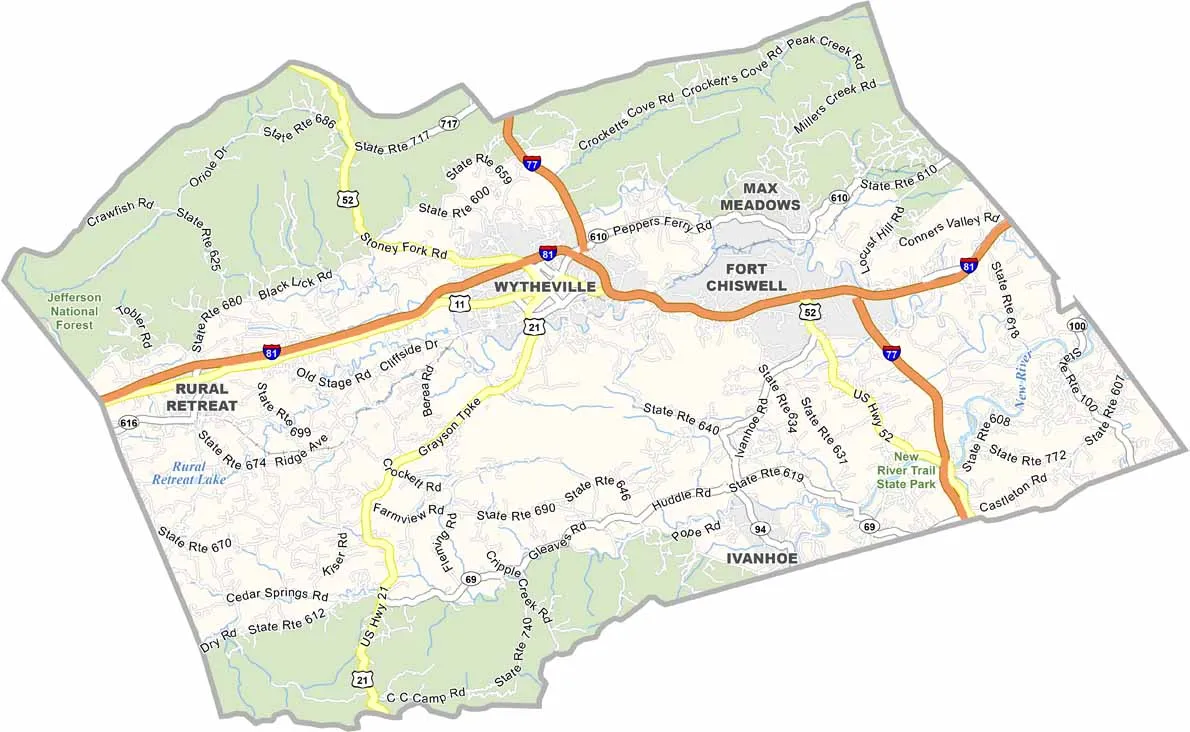 Photo: Wythe County, Virginia, via uscountymaps.com
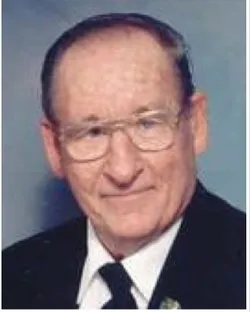 Photo: Calvin Pruett, via images.findagrave.com
He flunked out of Virginia Polytechnic Institute in 1931, at the age of twenty. The chair of the engineering department told him, not unkindly, that he might be better suited to a trade.
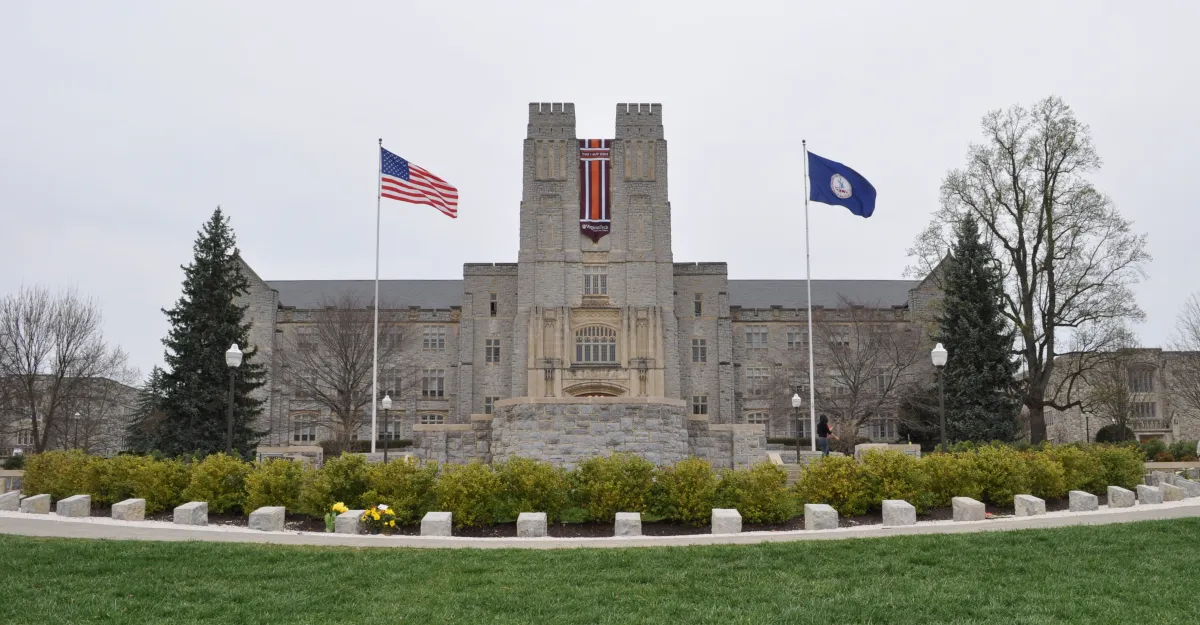 Photo: Virginia Polytechnic Institute, via smapse.com
Pruett went home, worked in his father's store for two years, and spent his evenings reading every civil engineering text he could find at the county library.
A Problem He Couldn't Stop Thinking About
By the mid-1930s, American roads were in a peculiar state of crisis. The automobile had gone from novelty to necessity in less than a generation, and the road infrastructure hadn't kept pace. The country's highways were a patchwork — some stretches modern and well-designed, others little more than widened farm tracks with better signage. Accidents were climbing. Travel times were unpredictable. The economics of moving goods across the country were suffering.
Pruett had been watching this problem develop with the focused attention of someone who has nothing else to do but think. He had taken a job as a surveyor's assistant with the Virginia Department of Highways — entry-level work, mostly carrying equipment and recording measurements — but it put him in the field, looking at actual roads and actual traffic patterns, and his mind was constantly running calculations.
He started keeping a notebook. Then several notebooks. He sketched intersection designs, studied the angles at which vehicles naturally tended to navigate curves, and developed a series of observations about what he called "driver expectation" — the idea that roads should be designed around how human beings actually behave behind the wheel, not around theoretical ideals of how they should behave.
This sounds obvious now. In the 1930s, it was not a standard framework in highway engineering.
When he ran out of notebook pages, he used whatever paper was available. His colleagues later remembered him sketching on the backs of envelopes, lunch bags, and, famously, a long series of grocery store receipts that he taped together into a kind of rough scroll.
Finding the Room Where Decisions Were Made
The break, when it came, was almost absurdly accidental.
In 1937, Pruett submitted a brief unsolicited memo to the Federal Bureau of Public Roads, outlining his thoughts on interchange design for high-speed roads. He expected nothing from it. He had no credentials, no institutional affiliation beyond his junior surveyor's position, and no connections in Washington.
The memo landed on the desk of a mid-level federal engineer named Harold Strickland, who read it twice, put it down, picked it up again, and then did something bureaucrats rarely do: he tracked down the person who wrote it.
Strickland later said that what struck him about Pruett's memo wasn't just the ideas — some of which he found genuinely novel — but the clarity of the reasoning. "Most technical memos are written to impress other engineers," Strickland told a colleague at the time. "This one was written to actually explain something."
Pruett was brought to Washington for a series of consultations. He arrived in a suit that didn't quite fit and with no formal portfolio, just his notebooks. He sat in rooms with men who had advanced degrees from MIT and Johns Hopkins, and he held his own — not by matching their academic vocabulary, but by asking questions that nobody had thought to ask.
The Ideas That Stuck
Pruett's core contributions to what would eventually become the Interstate Highway System centered on three areas.
The first was interchange geometry. He argued, with considerable supporting observation, that the standard diamond interchange design being used on most American highways created dangerous conflict points where vehicles moving at different speeds intersected too abruptly. He proposed modified designs that extended the merging zone and reduced the angle of convergence — changes that reduced accident rates in pilot projects by measurable margins.
The second was grade separation philosophy. Pruett was an early and persistent advocate for eliminating at-grade crossings on high-speed roads entirely — meaning no traffic lights, no intersections where fast-moving highway traffic met local cross traffic. This was expensive. It was also, he argued, the only design that could actually deliver on the promise of a national highway network. His internal memos on this subject, circulated through the Bureau of Public Roads in the early 1940s, helped build the institutional consensus that eventually shaped the 1956 Federal Aid Highway Act.
The third was what he called "the forgiveness principle" — the idea that roads should be designed to account for driver error rather than punish it. Wide shoulders. Gentle recovery slopes. Guardrail placement that gave a drifting vehicle somewhere to go other than a ditch or a barrier. This philosophy, which is now standard in American highway engineering, was genuinely radical when Pruett was first articulating it.
He never held a senior title. He was never the director of anything. His name appears in the footnotes of several significant planning documents from the 1940s and early 1950s, and in the acknowledgments of at least one engineering textbook, where he is described only as "a consultant."
The Degree He Never Got
In 1961, Virginia Polytechnic Institute — the school that had dismissed him three decades earlier — offered Pruett an honorary degree. He accepted it with characteristic brevity, gave a short speech that avoided any reference to the irony of the occasion, and drove home on the interstate.
He retired in 1968 and spent his remaining years in a small house in Roanoke, Virginia, where he kept a workshop in the garage and occasionally consulted for local highway departments on specific design problems. He died in 1979.
A transportation historian named Margaret Ohlsson spent several years in the 1990s reconstructing Pruett's contributions from archival records, and her conclusion was pointed: a meaningful portion of the design philosophy embedded in the American interstate network reflects ideas that originated with a man who never officially belonged to the profession.
"He thought about roads the way a driver thinks about roads," Ohlsson wrote, "which turns out to be exactly how roads need to be designed."
Next time you're on the highway and everything just feels right — the merge is smooth, the exit gives you room to breathe, the curve ahead is exactly where you expected it — there's a decent chance you're driving through someone's best idea. Someone who learned it not in a classroom, but on the side of the road, with a pencil and whatever paper he had in his pocket.