Pages Over Borders: The Small-Town Librarian Who Kept Ideas Alive When Armies Were Burning Them
There is a particular kind of bravery that doesn't wear a uniform. It doesn't march in formation or carry a rifle. Sometimes it arrives quietly, in a cardboard mailing box, packed between layers of brown paper and addressed to a church rectory in a country that no longer legally exists.
That was the bravery of Eleanor Marsh — a librarian from Millbrook, Ohio, a town most Americans have never heard of and couldn't find on a map. In the early 1940s, while much of the world was focused on the thunderous machinery of war, Marsh was doing something that seemed almost laughably small: mailing books.
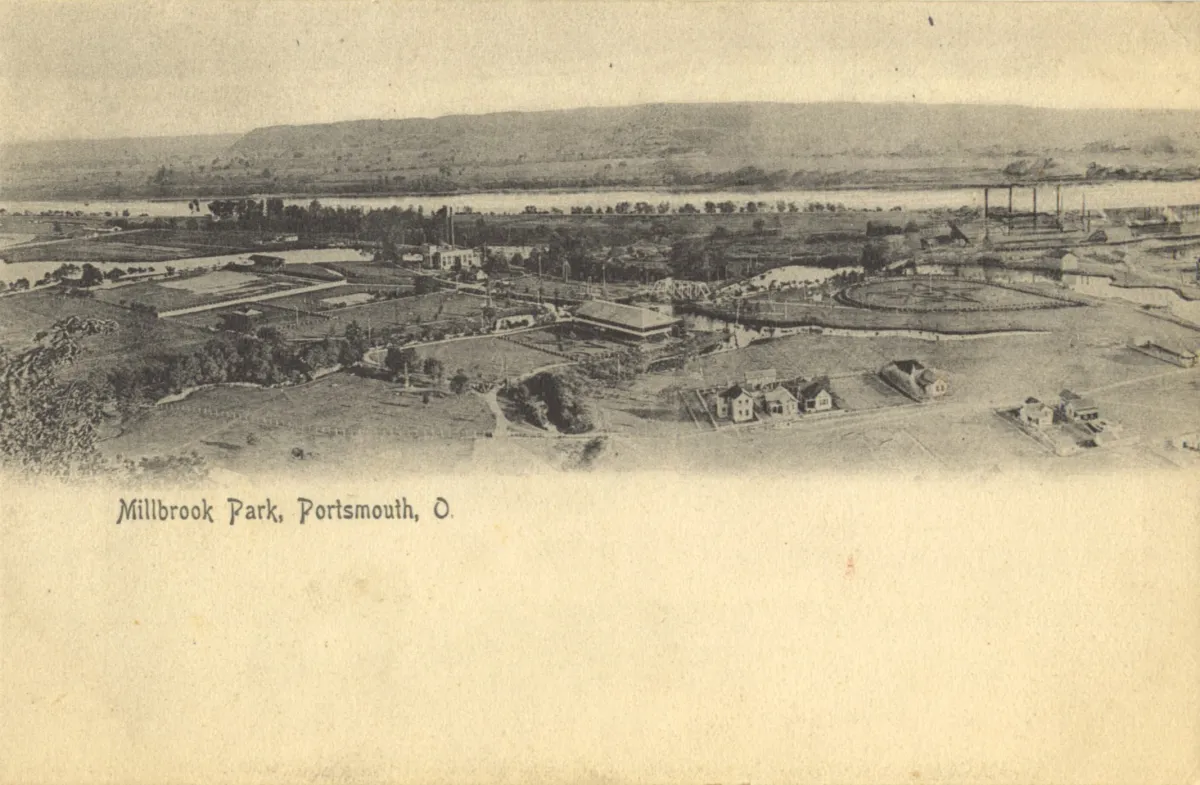 Photo: Millbrook, Ohio, via www.sciotolibrary.org
 Photo: Eleanor Marsh, via bloximages.chicago2.vip.townnews.com
Except it wasn't small at all.
A Quiet Woman With a Loud Conscience
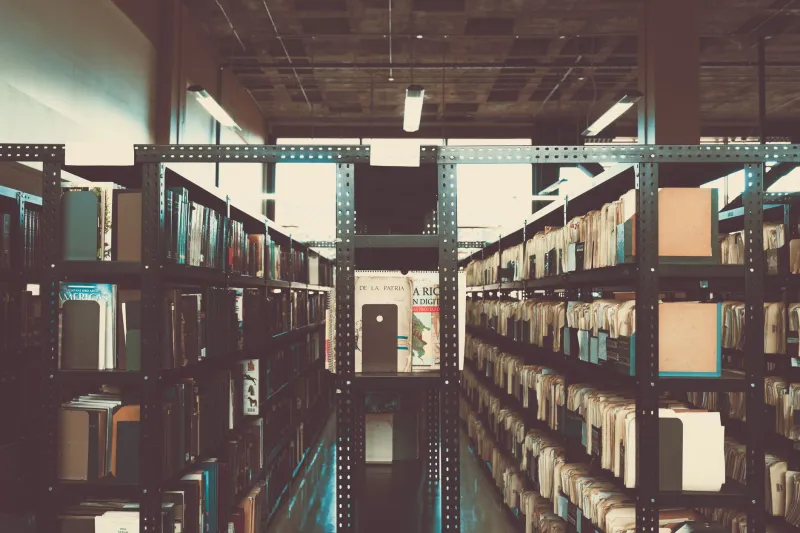
Marsh came to librarianship almost by accident. She had trained as a schoolteacher, but a bout of rheumatic fever in her mid-twenties left her unable to stand for long stretches. The Millbrook Public Library — a single-room building with a coal stove and approximately four thousand volumes — offered her a chair, a catalog system, and a purpose.
By the time the war broke out in Europe, Marsh had been running that library for nearly a decade. She knew her patrons by name, knew which farmers preferred Zane Grey and which schoolchildren were secretly working through Hemingway. She also read the newspapers closely, and what she read in them disturbed her deeply.
The reports filtering out of occupied France, Poland, and the Netherlands described something she found almost physically painful: the systematic destruction of libraries. The Nazis weren't just banning books — they were erasing them. Entire municipal collections were being emptied, cataloged for ideological compliance, and purged. Works by Jewish authors, by political dissenters, by anyone whose ideas threatened the regime, were being reduced to ash in public squares.
For Eleanor Marsh, a woman whose entire life was organized around the premise that ideas deserve to survive, this was not an abstraction. It was a call.
The Network Nobody Planned
She didn't set out to build a resistance network. That's perhaps the most remarkable part of the story.
It started in 1941, when Marsh began corresponding with a Lutheran minister in New Jersey who had family connections in Norway. She asked, carefully and without much elaboration, whether it was possible to get reading materials to people in occupied territories. The minister said he thought it might be, through certain church channels. Marsh sent a test package of twenty books — philosophy texts, poetry collections, a few novels — wrapped in plain paper and mailed through a circuitous route involving a Danish merchant sailor the minister knew.
Three months later, she received a postcard. It said only: More, please.
Over the following four years, Marsh quietly expanded what had begun as a personal gesture into something far more elaborate. She recruited local church women's groups to help with packing and postage costs. She enlisted a retired postal worker who understood which international mail routes were still functioning and which were being monitored. She made contact with a commercial fishing company in Maine whose vessels occasionally rendezvoused with boats from neutral Sweden — a country that served as a critical transit point for material moving into occupied Scandinavia and, through underground channels, further into Poland and France.
At its peak, Marsh's network was moving several hundred volumes a month. She kept meticulous records — not of the recipients, whose names she deliberately never wrote down, but of the titles. Aristotle. Voltaire. Langston Hughes. Steinbeck. Works that had been declared dangerous by governments that feared what a literate population might eventually demand.
The Risk Nobody Talked About
It would be easy, from this distance, to romanticize what Marsh was doing. It's worth being clear: it was genuinely dangerous.
International mail during wartime was subject to inspection on multiple ends. American authorities were not always sympathetic to citizens conducting unofficial correspondence with occupied nations. Several of Marsh's early contacts were questioned by federal agents. One of her church volunteers was briefly detained and interviewed by the FBI, though never charged.
Marsh herself was visited twice by federal investigators who had flagged the unusual volume of international packages originating from a small Ohio town. Both times, she offered them tea, showed them her library card catalog, and explained with complete composure that she believed in the free exchange of information. Both times, they left without taking further action. Whether this was because she was genuinely not considered a serious threat, or because her calm was simply too disarming to penetrate, nobody ever quite figured out.
What kept her going, according to the letters she left behind, was something almost mundane: professional conviction. She was a librarian. Keeping books accessible was her job. The fact that a war had made the job more complicated didn't change the fundamental obligation.
The Aftermath That Almost Nobody Noticed
When the war ended, Marsh quietly dismantled her network. She didn't write a memoir. She didn't give interviews. She went back to running the Millbrook Public Library, ordered new acquisitions, and cataloged returned books with the same careful attention she had always brought to the work.
The story might have disappeared entirely if not for a historian named David Kessler who, in the early 1980s, was researching the wartime book trade and stumbled across a reference to an Ohio mailing network in a Norwegian church archive. It took him three years to trace it back to Marsh, who was by then in her late seventies and living in a retirement community outside Columbus.
She agreed to one interview. She was, by all accounts, mildly amused that anyone considered the story remarkable.
"Books are meant to be read," she told Kessler. "Stopping them from being read is the strange thing. I was just trying to keep things normal."
What She Actually Built
Kessler's eventual paper on Marsh's network — published in a library science journal and largely overlooked outside academic circles — documented something striking: several of the recipients of her packages had gone on to become significant figures in postwar European intellectual and political life. A Polish philosopher. A French resistance pamphleteer who later became a senator. A Norwegian teacher whose classroom, stocked with smuggled texts, produced a generation of students who went on to rebuild democratic institutions.
None of them knew Eleanor Marsh's name. She hadn't signed the packages.
That might be the truest measure of what she accomplished. She wasn't building a legacy. She was doing a job — her job, expanded to meet an extraordinary moment. The results rippled outward in ways she never tracked and never claimed.
The Millbrook Public Library still exists, though it has moved to a larger building. On one wall, there is a small plaque commemorating Eleanor Marsh's years of service. It notes the dates she worked there and describes her as a dedicated community librarian.
Which is accurate, as far as it goes. It just leaves out quite a bit.