They Told Her the OR Was No Place for a Woman. She Saved Millions of Babies Instead.
Virginia Apgar was the kind of medical student who made her professors uncomfortable in the best possible way. She was sharp, relentlessly curious, and had the kind of focused calm under pressure that good surgeons spend years trying to cultivate. By the time she completed her surgical residency at Columbia University's College of Physicians and Surgeons in the early 1930s, she had done everything right.
 Photo: Columbia University's College of Physicians and Surgeons, via www.vagelos.columbia.edu
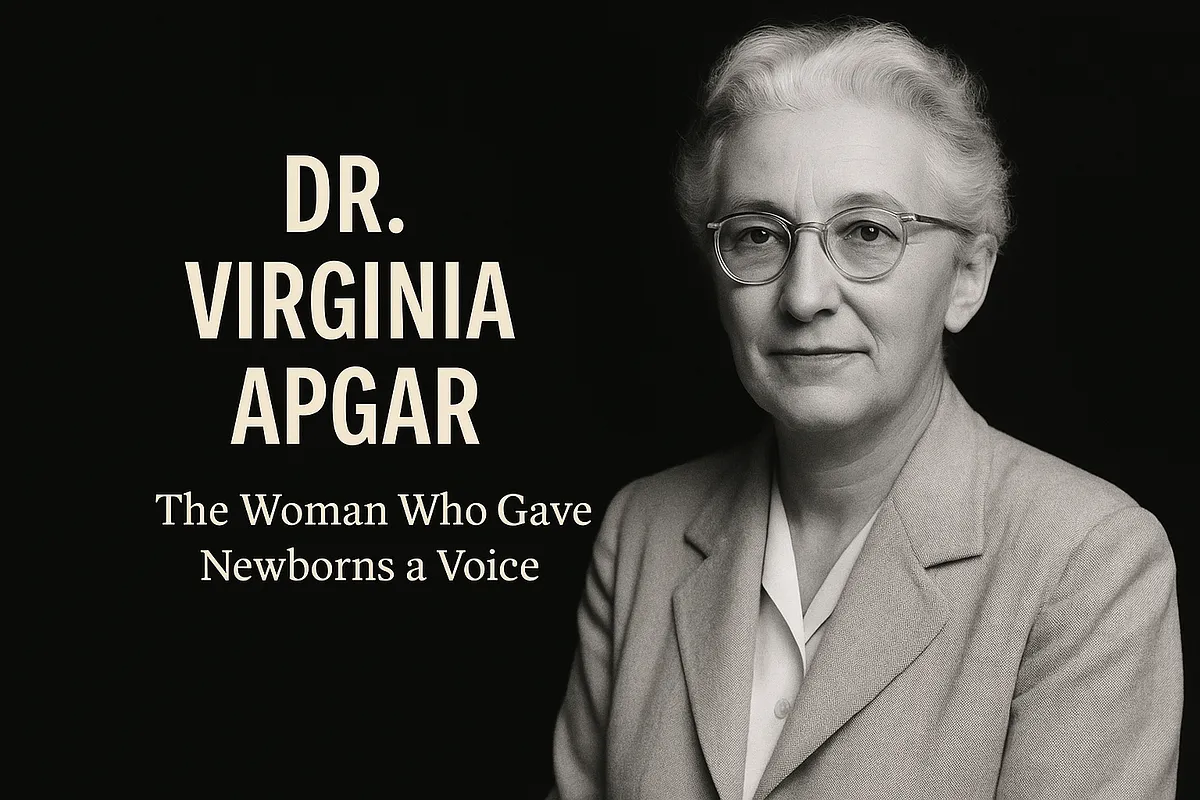 Photo: Virginia Apgar, via miro.medium.com
It didn't matter. The people running the operating rooms had already decided, before she walked in, that a woman would never be trusted with a scalpel in a serious hospital setting. The door closed before she had a chance to knock on it properly.
What she did next didn't just salvage a career. It saved lives on a scale that the men who dismissed her could never have imagined.
The Detour She Didn't Choose
Apgar graduated from Mount Holyoke College in 1929 and pushed through medical school during the Depression, borrowing money and working side jobs to stay afloat. She was not a woman who required comfortable circumstances to perform. She thrived on difficulty. When she completed her surgical training and the doors stayed shut, she could have left medicine entirely — plenty of people in her position did.
 Photo: Mount Holyoke College, via www.mtholyoke.edu
Instead, she listened to a mentor who suggested she consider anesthesiology. The advice was practical rather than inspiring: the field was less competitive, more accessible to women, and desperately in need of serious physicians. It was, in the blunt language of the era, a backwater. Surgeons viewed anesthesiologists as support staff. Hospitals paid them accordingly. The specialty had almost no formal academic structure and very little professional prestige.
Apgar walked in anyway. She became one of the first physicians in the country to pursue anesthesiology as a genuine specialty rather than a stopgap, and she trained under Ralph Waters at the University of Wisconsin — one of the few people in the country who took the field seriously as a science. When she returned to Columbia, she built an entire anesthesiology department from scratch, eventually becoming its first director.
The backwater, it turned out, had been waiting for someone willing to treat it like an ocean.
The Problem Nobody Had Properly Named
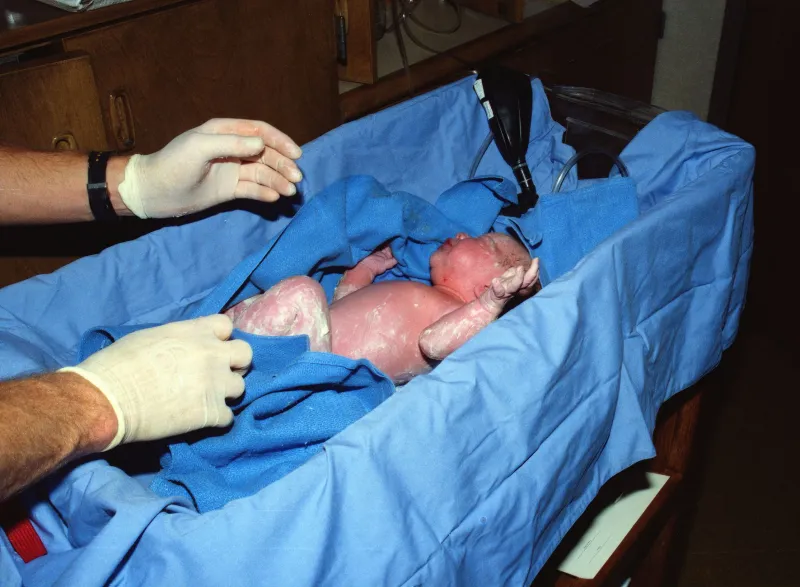
For all the advances in obstetric medicine through the early twentieth century, there was a striking gap in how newborns were assessed at birth. Delivery rooms were chaotic, understaffed, and operating under the assumption that a baby who was breathing was probably fine. Babies who were not fine were often not identified quickly enough to receive the interventions that might have helped them. The decision about whether a newborn needed urgent attention was largely intuitive — dependent on the experience and attention of whoever happened to be in the room.
Apgar, who spent years in delivery rooms administering anesthesia to mothers, watched this problem accumulate. She saw babies missed. She saw the absence of a shared language between physicians for describing a newborn's condition in the critical minutes after birth. In 1949, she began working on a solution.
The result was announced in 1952 at a medical conference, almost as an aside. Apgar described a simple scoring system — five criteria, each rated zero to two, assessed at one minute and five minutes after birth. Heart rate. Respiratory effort. Muscle tone. Reflex response. Color. A total score of ten meant the baby was in excellent condition. A score below seven meant immediate attention was needed.
It took about sixty seconds to administer. It required no equipment. Any trained person in the room could do it.
Small, Simple, and World-Changing
The Apgar Score did not look, on its surface, like a revolution. It was a checklist. Medicine had checklists. What made it transformative was the combination of simplicity and standardization — suddenly, physicians anywhere in the world were speaking the same language about a newborn's condition, and that shared language enabled research, comparison, and improvement in ways that had been impossible before.
The score also shifted the culture of delivery rooms in a way that is hard to overstate. Before Apgar, the moments immediately after birth were focused almost entirely on the mother. Her system directed attention systematically to the baby, creating a routine of assessment that became universal. Neonatology as a serious specialty — the intensive, focused care of vulnerable newborns — grew directly from the foundation her scoring system laid.
Estimates of how many lives the Apgar Score has saved run into the millions. The number is genuinely difficult to calculate, which is perhaps its own kind of testament: the intervention became so woven into standard practice that imagining delivery rooms without it requires imagining a different world entirely.
The Woman Behind the Score
Apgar herself was, by most accounts, a personality as vivid as her contributions. She played the violin, built her own instruments as a hobby, and was known for a wit that could be dry enough to sand furniture. She became a professor at Cornell University Medical College late in her career and spent her final years advocating for research into birth defects — a cause she pursued with the same stubbornness she had brought to every closed door she'd ever encountered.
She never married. She worked until she couldn't. She died in 1974 at sixty-five, having received the honors that serious medicine eventually offers its own, though never quite loudly enough.
In 1994, the United States Postal Service issued a stamp in her honor. In 1995, she appeared on a commemorative stamp in several other countries. The score that bears her name is still used in virtually every delivery room on the planet.
What the Closed Door Actually Opened
The story of Virginia Apgar is not, at its heart, a story about discrimination — though discrimination was absolutely part of it. It is a story about what a person of genuine ability does when the path they prepared for is blocked.
She did not settle. She did not retreat. She walked into a field that nobody respected and treated it as though it deserved the best science she could bring to it. And because she was working in a space that serious people had mostly ignored, she had room to see a problem that the crowded, prestigious corridors of surgery had somehow overlooked for decades.
The closed door, in the end, led somewhere the open one never could have.