The Greatest Con He Ever Pulled Was Becoming Real: Frank Abagnale's Strangest Legacy

The Lie That Kept Getting More Complicated
There's a particular kind of irony that life reserves for people who decide to fake their way through it: sometimes the faking works so well that it becomes indistinguishable from the real thing. Not as a metaphor. Literally, functionally, measurably indistinguishable.
Frank Abagnale Jr. is probably the most famous example of this phenomenon in modern American history, and even people who know his story — through the Steven Spielberg film, through his own memoir, through the decades of speaking engagements that followed his reinvention — often miss what's most genuinely strange and interesting about it.
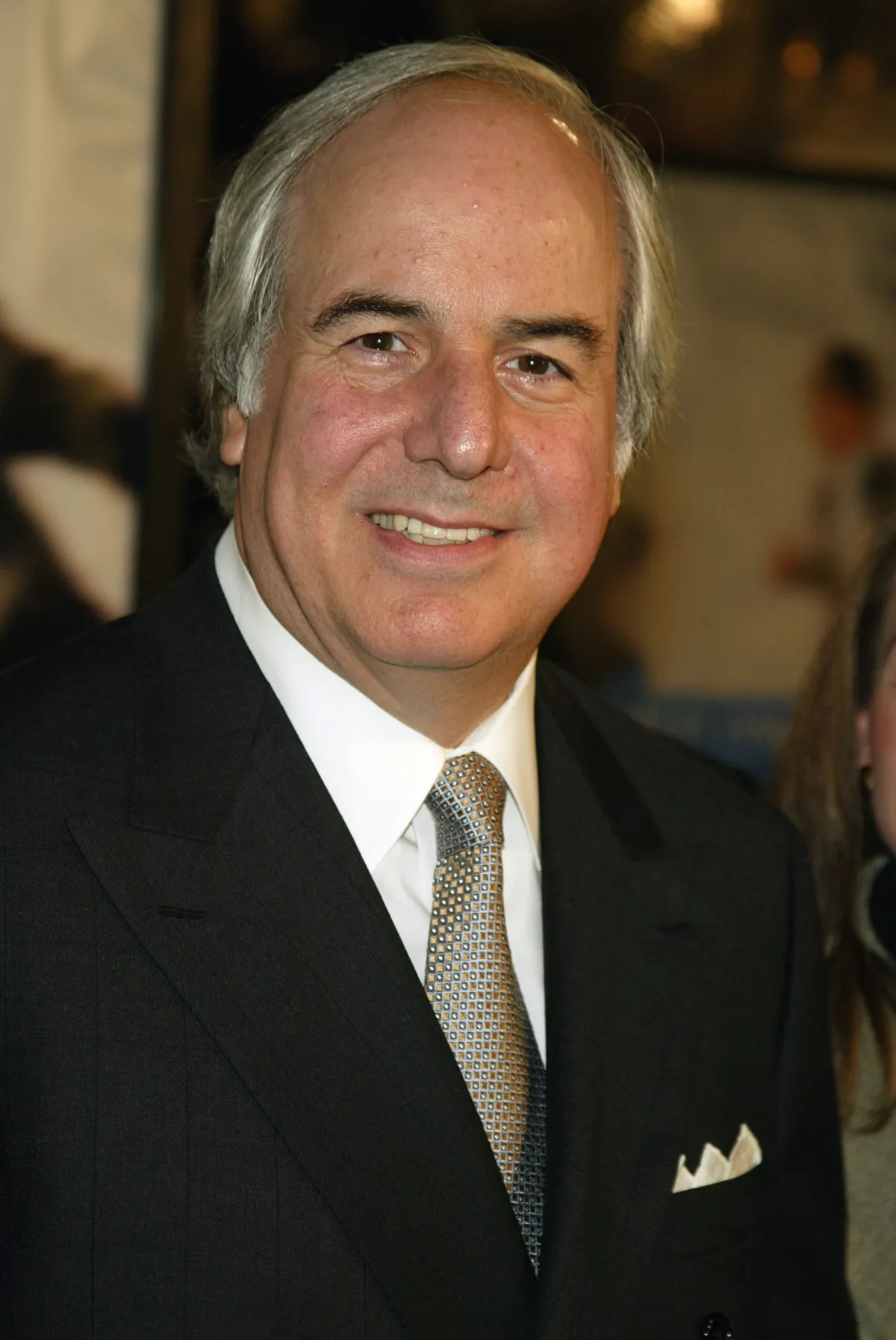 Photo: Frank Abagnale Jr., via luxlux.net
The fraud is the story everyone tells. The accidental education is the story worth examining.
Seventeen, Broke, and Already Convincing
Abagnale was sixteen when his parents divorced and seventeen when he left home in New York with a checkbook, a talent for reading people, and an almost supernatural ability to project confidence he didn't feel. What followed — documented across court records, FBI files, and his own extensively told account — was a years-long run of impersonation and fraud that took him across multiple countries and through multiple professional identities.
He posed as a Pan Am pilot, using a forged ID and a uniform he'd talked his way into obtaining, and flew over a million miles on deadhead flights by convincing airline staff he was a colleague. He posed as a physician in Georgia and supervised an emergency room for nearly a year. He posed as a lawyer in Louisiana and passed the bar exam on his third attempt — which, it's worth noting, is not an unusual number of attempts even for people who actually went to law school.
 Photo: Pan Am, via i.pinimg.com
The conventional reading of this period is that it was pure theater: a gifted actor performing roles he had no right to inhabit, skating on charm and audacity while the real professionals around him did the actual work. That reading is not entirely wrong. But it's incomplete in a way that matters.
The Strange Thing About Studying for an Exam You're Not Supposed to Take
To pass the Louisiana bar exam — even on a third attempt, even with a forged law degree from Harvard — you have to actually understand a significant body of legal material. The exam doesn't grade on confidence. It grades on answers.
Abagnale studied. He studied the way someone studies when they have no foundation to build on and no professor to ask for help — by going directly to primary sources, working through the logic of legal reasoning from scratch, and developing an understanding of how the law actually functions rather than how it's taught in a classroom.
He later described this period as unexpectedly absorbing. The material, approached without the context of a formal legal education, revealed patterns and internal logic that he found genuinely fascinating. He wasn't pretending to be interested. He was interested. The pretending had opened a door and then, without warning, he'd walked through it for real.
The same thing happened, in different ways, with each identity he inhabited. The time he spent posing as a physician required him to learn enough medicine to avoid being exposed. The learning, pursued initially as camouflage, produced actual competence. Not surgical competence — he was careful to stay away from clinical decisions he wasn't equipped to make — but a working knowledge of medical administration, terminology, and institutional structure that was, by any practical measure, genuine.
What the Con Man Figured Out That the Classroom Hadn't
There's a concept in education research sometimes called 'situated learning' — the idea that skills and knowledge acquired in real-world contexts, under actual pressure, tend to stick differently than the same material absorbed in a classroom. The stakes are different. The feedback is immediate. The motivation is visceral rather than theoretical.
Abagnale experienced an extreme version of this. He learned under conditions of maximum pressure, because the cost of not learning was exposure and arrest. Every piece of knowledge he acquired was immediately tested against reality. There was no grace period, no partial credit, no opportunity to coast on memorized formulas without understanding them.
The result, paradoxically, was an education that produced genuine expertise — not in spite of its fraudulent origins, but in some complicated way because of them.
This is not a defense of fraud. The people harmed by Abagnale's deceptions — the institutions, the colleagues who trusted him, the systems he exploited — paid real costs for his education. The moral ledger is not balanced by the fact that he eventually became useful. But the intellectual phenomenon is real, and it's worth taking seriously on its own terms.
From Federal Prison to Federal Consultant
Abagnale was eventually caught in France in 1969, extradited, convicted, and served time in federal prison in the United States. He was released in the mid-1970s under an arrangement with the federal government that put his particular skill set to work on the other side of the ledger: helping banks and corporations understand how fraud was committed so they could defend against it.
This second act is where the story gets genuinely complicated in a way that deserves more attention than it usually gets. Because the question of whether Abagnale was a legitimate security consultant or an elaborate ongoing con — a man trading on a manufactured reputation built from crimes he'd committed — is not as easy to answer as it might seem.
The honest answer is probably: both, at different times, in different proportions.
What is clear is that the consulting work was effective. The fraud prevention systems he helped design and the training programs he developed for financial institutions produced measurable results. The knowledge he brought to that work was real — not because he'd earned it through legitimate channels, but because the process of faking expertise had, through some deeply strange alchemy, produced actual expertise.
The Educator He Became by Accident
By the 1980s and '90s, Abagnale had become one of the most sought-after speakers on fraud prevention in the country. He lectured at the FBI Academy. He consulted for major corporations. He wrote and spoke extensively about the mechanics of deception — not as confession, but as instruction.
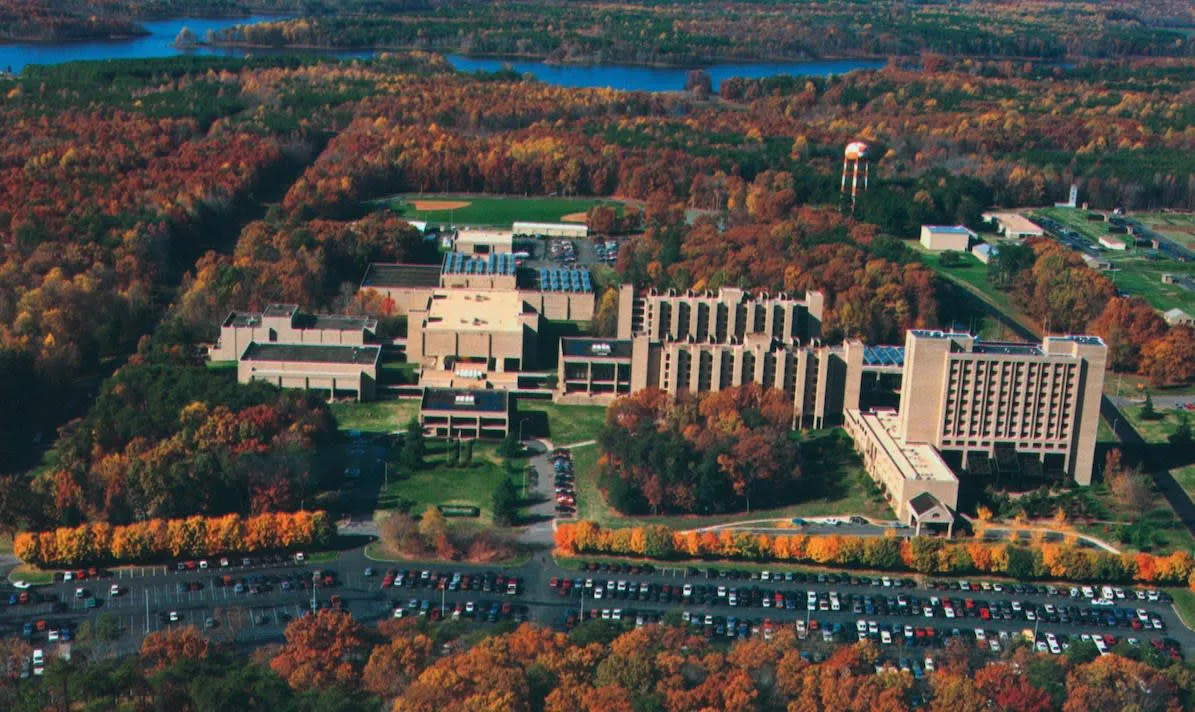 Photo: FBI Academy, via assets.simpleviewcms.com
The irony of a former con man teaching people how not to be conned is obvious enough that everyone mentions it. What gets mentioned less often is the quality of the teaching. People who attended his sessions consistently described them as among the most practically useful professional development experiences they'd encountered — specific, psychologically acute, and informed by a depth of understanding that purely theoretical training couldn't replicate.
He knew how cons worked because he had lived inside them. He knew what made people vulnerable because he had spent years finding and exploiting those vulnerabilities. When he taught, he was teaching from the inside of the subject in a way that no textbook could reproduce.
What His Story Actually Tells Us
The easy moral of the Frank Abagnale story — the one the movie prefers — is about charm and audacity and the strange glamour of a life lived outside the rules. It's a compelling story, and it's not false.
But the more interesting moral is quieter and less cinematic. It's about the relationship between pretending and becoming. About the fact that immersive, high-stakes engagement with a subject — even engagement entered into for entirely dishonest reasons — can produce genuine mastery. About the way that the human capacity to learn is not particularly concerned with the purity of the motivation driving it.
Abagnale didn't set out to become a fraud prevention expert. He set out to survive, and then to thrive, using the tools he had. The tools, applied obsessively over years, sharpened themselves.
The greatest trick he ever pulled wasn't convincing the world he was a pilot or a doctor or a lawyer. It was convincing himself — and then actually becoming — someone worth listening to.
That part, somehow, turned out to be true.