When the Tobacco Gave Out, the Grapes Came In — and Nothing Was Ever the Same
Desperation is a remarkably effective teacher. It strips away the luxury of waiting for the right conditions, the right credentials, the right moment. It hands you whatever's available and says: figure it out.
For a tobacco farmer in mid-century Virginia, what was available was a stretch of red clay soil that everyone in the county agreed was good for nothing in particular, a market that had turned against him, and enough stubbornness to try something that made his neighbors shake their heads.
What he accidentally built, in the years that followed, was the foundation of modern American wine.
The End of Tobacco Country
To understand what he was up against, you have to understand what tobacco meant to Virginia in the mid-twentieth century. It wasn't just a crop. It was an identity, a culture, an economic inheritance passed from one generation to the next with the assumption that it would always be there. Families organized their entire lives around the planting and harvesting calendar. The smell of curing tobacco was the smell of security.
When that security began to erode — through shifting federal policies, changing market dynamics, and the slow but gathering awareness that the product itself was a public health catastrophe — the farmers who had built their lives around it faced a choice that had no good options. Adapt or sink.
He was not, by most accounts, a man who adapted easily. He had farmed tobacco the way his father had, and his father before that. He knew the rhythms of that particular work the way you know the layout of a house you've lived in for decades — by feel, without having to think about it. Learning something entirely new, at an age when most men were thinking about simplifying rather than starting over, was not an appealing prospect.
But the numbers didn't leave him much room for sentiment.
The Land Nobody Wanted
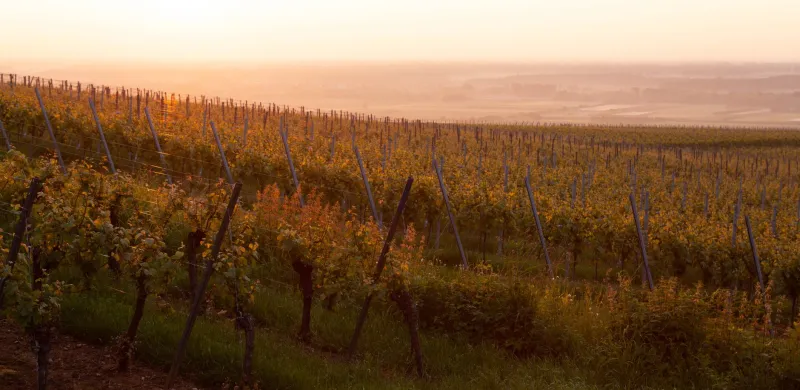
The parcel he decided to experiment with was, by local consensus, the least promising piece of ground on his property. The soil was thin and acidic, the drainage was inconsistent, and the slope was awkward enough to make conventional farming a genuine headache. His neighbors had opinions about what he was doing with it, and those opinions were not encouraging.
Grapes, as it turned out, have a complicated relationship with adversity. The conventional wisdom in viticulture — and it is, in fact, conventional wisdom grounded in centuries of European experience — holds that vines stressed by poor soil and difficult conditions often produce more concentrated, more interesting fruit than vines grown in comfortable abundance. The struggle is part of the product.
He didn't know this when he planted his first vines. He learned it the hard way, through seasons of observation and failure and incremental adjustment. He read what he could find, which wasn't much — American wine literature in the mid-twentieth century was thin, and what existed was largely dismissive of the idea that Virginia could produce anything worth drinking. He wrote letters to agricultural extension programs. He talked to the handful of other farmers in the region who were making similar desperate pivots.
And he paid attention to his land in the obsessive, granular way that only farmers understand — the way that comes from knowing that everything depends on getting it right.
Cracking the Code Nobody Knew Existed
What he stumbled onto, through years of trial and error on that unpromising hillside, was a set of practices that would eventually become central to the American wine revolution.
He discovered, largely by necessity, the value of working with native and hybrid grape varieties rather than forcing European varietals onto soil that didn't want them. He developed trellising techniques adapted to Virginia's specific climate — the humid summers, the variable springs, the frost windows that European textbooks didn't account for. He learned to read his particular terroir, a French word he probably didn't use but a concept he understood intuitively from decades of reading land for a living.
The wine he eventually produced was not, by early accounts, exceptional. It was rough, inconsistent, and occasionally baffling. But it was wine, grown on land that experts had written off, in a state that the broader industry had largely ignored. And with each passing season, it got better.
Word traveled slowly in those pre-internet days, but it traveled. Other farmers came to look at what he was doing. Agricultural researchers who had been skeptical began to take notice. The techniques he had developed through pure necessity started to circulate through the small but growing community of people who believed that American wine could be something more than a punchline.
The Ripple That Became a Wave
The American wine industry's eventual emergence as a genuine rival to European producers is a story with many chapters and many contributors. The famous 1976 Paris tasting — where California wines blind-tasted against French classics and won — gets most of the attention, and rightly so. It was a cultural earthquake.
But earthquakes don't happen without years of geological pressure building underneath. The quiet, stubborn work of farmers like him — people who had no investment in the existing hierarchy of wine prestige and every incentive to figure out a different way — was part of what made the ground ready to move.
Virginia itself would go on to become one of America's most respected wine regions, a development that would have seemed like science fiction to the neighbors who watched him plant his first vines on that unremarkable hillside. The techniques he pioneered, adapted and refined by the winemakers who came after him, are embedded in the practices of vineyards across the eastern United States.
He didn't live to see most of it. He died before the industry he helped seed reached full flower, before the awards and the critical recognition and the wine tourism that now brings visitors from across the country to the Virginia countryside.
What Nothing Left to Lose Actually Looks Like
There's a version of this story that packages itself as inspiration — the determined farmer who beat the odds and changed an industry. That version isn't wrong, exactly, but it's a little too clean.
The more honest version is messier and more interesting. He didn't set out to change anything. He set out to survive. The innovation that followed wasn't the product of vision or ambition; it was the product of a man with no good alternatives being forced to pay very close attention to the only thing he had left.
That's what nothing left to lose actually looks like from the inside. Not heroic. Not cinematic. Just a person and a piece of difficult ground and the slow, unglamorous work of figuring out what's possible when everything you planned on has already fallen apart.
The grapes didn't care about his credentials or his original plan or what the experts said about his soil. They just grew. And in growing, they gave him — and eventually an entire industry — something nobody expected to find there.