Twice Rejected, Completely Right: The Outsider Who Rebuilt American Healthcare From the Ground Up
Failure has a way of directing people toward the questions they were actually supposed to be asking. For most of us, that redirection is subtle — a door closes, we find another hallway. But for the woman at the center of this story, the redirection was blunt, institutional, and repeated. She was told, in the clearest possible terms, that she did not belong in healthcare.
She responded by changing the way healthcare looks, feels, and functions for virtually every American who has ever spent time in a hospital bed.
The First Rejection, and Then the Second
She came to nursing school in the postwar years with genuine intention. Medicine mattered to her — not in the abstract, idealized way that fills application essays, but in the practical, urgent way of someone who had watched people she loved suffer through inadequate care. She wanted to help. She was prepared to work.
The program disagreed with her on the fundamentals. Her academic performance was inconsistent, her clinical instincts were questioned, and after one failed attempt she was advised to reconsider her path. She reconsidered, returned, and was turned away again. The second rejection was delivered with the particular cruelty of finality — the kind that's meant to be heard as a verdict rather than a setback.
For a while, she accepted that verdict. She took work in administrative roles adjacent to healthcare — scheduling, facilities coordination, the unglamorous operational machinery that keeps medical institutions running. It was invisible work, the kind that nobody in a white coat notices unless something goes wrong.
But it put her inside hospitals. And once she was inside, she couldn't stop noticing what was wrong with them.
The Hospital as a Source of Harm
Mid-century American hospitals were, by contemporary standards, genuinely hostile environments — and not just because of the limitations of medical technology. The physical design of these facilities was almost aggressively indifferent to patient experience. Wards were loud, disorienting, and flooded with the kind of institutional fluorescent light that makes everyone look and feel worse than they actually are. Navigation was a puzzle. Privacy was a luxury rarely afforded. The architecture communicated, with remarkable consistency, that the patient's comfort was a secondary concern at best.
What she began to document — first in personal notes, then in more formal observations — was the relationship between these design failures and patient outcomes. Noise levels that disrupted sleep and slowed recovery. Layouts that increased infection risk by funneling foot traffic through the wrong spaces. Lighting that made clinical assessment harder, not easier. The absence of natural elements — windows, plants, daylight — in environments where people were already at their most vulnerable.
None of this was entirely unknown. But nobody had assembled the pieces into a coherent argument, and nobody with the right credentials was particularly motivated to do so. She had no credentials at all, which meant she had nothing to lose by saying the uncomfortable thing plainly: hospitals, as designed, were making patients sicker.
Building a Case Without a Badge
The challenge she faced was one that any outsider pushing against an established system will recognize immediately. Her observations were solid. Her logic was sound. But she had no medical degree, no research pedigree, no institutional affiliation that would make the people in charge take her seriously.
So she built her credibility the hard way.
She read everything she could find on environmental psychology, on the nascent field of behavioral medicine, on the few scattered studies that touched on the relationship between physical space and patient recovery. She forged connections with architects who were beginning to ask similar questions from a design perspective. She attended conferences where she wasn't particularly welcome and asked questions that made people uncomfortable.
Gradually — slowly enough to be maddening, quickly enough to be remarkable — she assembled a body of work that couldn't be easily dismissed. Research collaborations. Published observations. A framework for thinking about hospital design that placed the patient's physiological and psychological experience at the center of every decision.
The field that would eventually be called evidence-based design — the practice of building healthcare environments based on measurable patient outcomes rather than operational convenience — owes a significant and underacknowledged debt to her early insistence that the question was worth asking.
When the Industry Finally Listened
Change in healthcare infrastructure is geological in its pace. Hospitals are expensive to build and more expensive to rebuild. Administrators are risk-averse by training and by necessity. The idea that a building's physical characteristics could meaningfully affect clinical outcomes required a shift in thinking that institutions don't make lightly.
But the data, once it started accumulating, was difficult to argue with. Studies began to confirm what she had been saying for years: patients in rooms with natural light recovered faster. Reduced noise levels correlated with better sleep and lower pain medication use. Thoughtful wayfinding reduced patient anxiety. Private rooms decreased infection rates in ways that justified their additional cost.
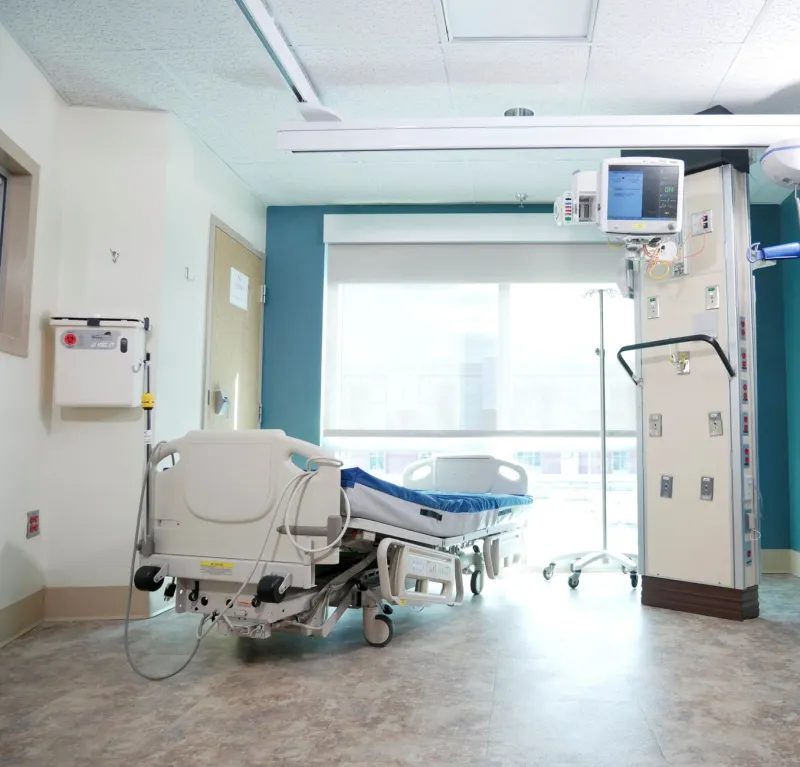
By the time the healthcare design movement gained real institutional momentum in the 1980s and 1990s, her foundational work had been absorbed into the mainstream conversation — sometimes with attribution, sometimes without. New hospital construction began to look genuinely different. The sterile, labyrinthine, fluorescent-lit fortresses of the postwar era gave way to facilities that incorporated daylight, greenery, quieter mechanical systems, and layouts designed around human movement rather than administrative efficiency.
The patients who recovered in those rooms generally didn't know why they felt slightly less terrible than they might have otherwise. They didn't know about the woman who had been rejected from nursing school twice and had spent decades making the argument that the room itself was part of the treatment.
The Credential That Couldn't Be Taught
There's an irony at the core of her story that she reportedly acknowledged with some amusement in her later years. The thing that made her perspective valuable — the thing that no credentialed insider could have easily replicated — was precisely the exclusion she had experienced.
Because she had never been trained to accept hospitals as they were, she never stopped seeing them as they shouldn't be. The nurse's training that she was denied would have socialized her into the existing system. The rejection that stung so badly turned out to be the condition of her usefulness.
Not every door that closes is hiding something better. But sometimes the hallway you're forced into leads somewhere the well-credentialed, well-adjusted, properly-admitted version of yourself would never have thought to go.
For millions of Americans who have recovered in hospitals designed with their humanity in mind, that forced detour made all the difference.