Index Cards and Instinct: The Day Job Survivor Who Built a Better Classroom From the Bottom Up
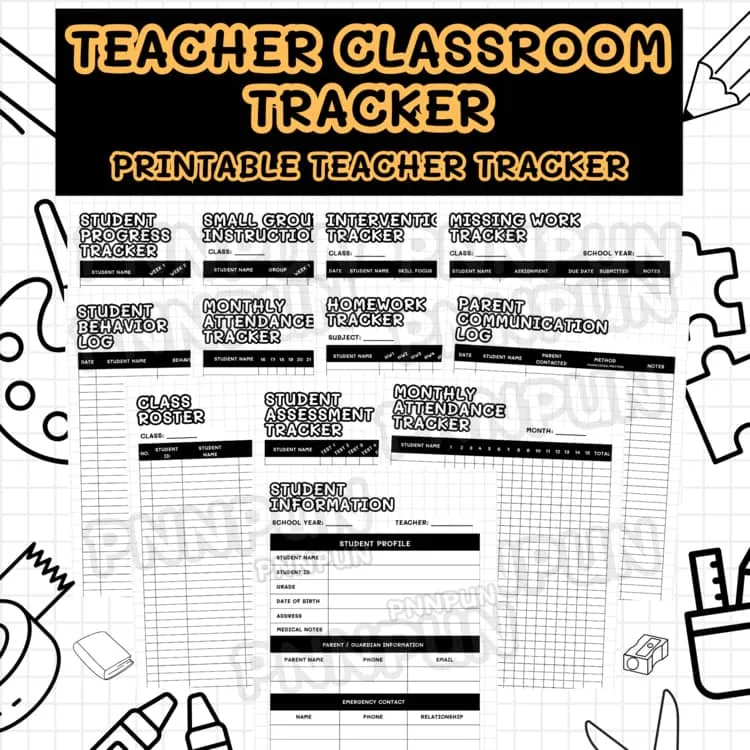
Photo: teacher classroom index cards student tracking notes elementary school, via ecdn.teacherspayteachers.com
The Invisible Teacher
There is a particular kind of invisibility that substitute teachers know well. You walk into a classroom full of kids who have already calculated, with the ruthless accuracy of children, exactly how much they can get away with today. The regular teacher's lesson plan — if one was left at all — is a single photocopied sheet with instructions that assume resources you don't have and context you weren't given. The administration is busy. The other teachers are busy. You are, for all practical purposes, on your own.
Renata Osei had been living that invisibility for three years by the time she started carrying index cards.
It was a practical decision, not an inspired one. She was subbing across four different elementary schools in the Columbus, Ohio, school district in the late 1990s, cycling through classrooms with no guarantee of returning to the same room twice. She had no way to know, walking in, which kids had been struggling with fractions for two weeks or which ones were reading two grade levels ahead and needed something harder to stay engaged. The lesson plan didn't tell her. The kids certainly weren't going to volunteer the information.
So she started asking. And writing things down.
The System That Wasn't a System Yet
At first, the index cards were purely personal — a survival tool for someone trying to do a decent job under conditions that made decent jobs difficult. Renata would spend the first ten minutes of a class doing a quick informal assessment: a few questions, a short written exercise, a problem on the board. She'd note what she saw on cards, one per student, and keep them in a small plastic box organized by school and classroom.
The cards weren't sophisticated. They were observations: struggles with carrying in addition, strong verbal but avoids writing, checks work carefully, finishes fast and disrupts when bored. The kind of notes a thoughtful teacher builds up over months, compressed into whatever Renata could capture in a morning.
Over time, the cards became something more interesting. Because Renata kept returning to the same classrooms — subbing is, in many schools, a semi-regular gig for the teachers who need her — she started building longitudinal pictures of individual kids. She could see, across multiple visits spread over a semester, whether a student's struggles were persisting, improving, or shifting to new areas. She was doing something that the formal assessment systems in those schools were not: tracking the actual shape of a child's learning over time, not just their performance on a single test.
When she started transferring her card notes into a spreadsheet — partly because the box was getting unwieldy, partly because a friend had shown her what Excel could do — the data started talking back to her in ways the cards alone hadn't.
What She Could See That the System Couldn't
Here's what Renata noticed, sitting at her kitchen table with a laptop and a printout of her own makeshift database: the formal assessments that schools were using to track student progress were almost exclusively backward-looking. They told you where a kid had been. They were snapshots — useful, but static. What they didn't do was show you the trajectory. The direction of travel.
A kid who scored a 65 on last month's math assessment and a 70 on this month's was, by most metrics, still a below-average performer. But they were moving. That movement — the momentum, the rate of change — was invisible in the official data. And to Renata, who had been watching kids in real classrooms with no agenda other than figuring out how to help them today, the momentum was often the most important thing.
She also noticed something about the kinds of interventions that actually worked. Not the ones that looked impressive in a curriculum brochure. The small ones. The specific ones. The student who clicked on fractions the day Renata used pizza slices instead of pie charts. The kid who started writing more freely the day Renata let him dictate his story to her first and write it down second. These weren't scalable, grant-funded programs. They were moments of contact, and Renata had been quietly cataloguing them for years.
She started building a more structured version of her tracking system. Not for any particular purpose. Because she couldn't stop.
From Kitchen Table to Something Bigger
The pivot came in 2002, when Renata's sister — a middle school teacher in Atlanta — called her in a panic about a new district-mandated assessment system that nobody understood and everybody hated. Could Renata explain how she tracked her own students? Could she walk through the spreadsheet?
She did. And then she did it again for three of her sister's colleagues. And then for a group of teachers at a professional development day who'd heard about the spreadsheet through the kind of informal network that moves faster than any official channel.
By 2004, Renata had quit substituting and was spending her days building a web-based version of her tracking system, funded initially by a small grant from a Columbus-area education nonprofit that had heard her pitch at a community meeting and liked what they saw. The platform was unglamorous by tech startup standards — no venture capital, no splashy launch event, no TED Talk. Just a tool built by someone who had spent years in the least glamorous corner of education, watching what actually happened when a real child sat down to learn something hard.
What made it different from the educational software already on the market was exactly what you'd expect from its origins: it was designed for teachers in the room, not administrators in the office. It tracked momentum, not just scores. It flagged patterns across time rather than generating report cards that landed in a drawer. And it was built with the assumption that the teacher was the expert on what was happening in front of them — the software's job was to make that expertise visible and portable, not to replace it.
The Outsider Advantage
Renata has talked in interviews about what she calls the "outsider's clarity" that her substitute years gave her. When you have no institutional loyalty to a particular curriculum or assessment philosophy — when you've floated through enough classrooms to see how many different approaches are being tried, and how inconsistently they connect to what kids actually need — you stop being able to pretend that the official version of education and the real version are the same thing.
The official version is coherent and well-documented and looks great in a grant proposal. The real version is a teacher standing in front of thirty kids with a single photocopied lesson plan and a box of index cards, trying to figure out who needs what before the bell rings.
Renata built her platform for the real version. That's why it worked.
What a Plastic Box of Index Cards Started
The platform Renata built eventually reached several thousand classrooms across more than a dozen states. It's been adapted, expanded, and in some cases absorbed into larger educational technology ecosystems — the usual fate of good ideas that get big enough to attract attention from people with more resources.
But the core logic, the thing that made it worth building in the first place, is still there: the belief that tracking how a child is moving through their learning matters more than any single snapshot of where they stand.
Renata didn't invent that idea in a university research lab. She discovered it in a classroom she wasn't supposed to be in charge of, with a plastic box and a pen and the stubborn conviction that if she paid close enough attention, she could figure out how to help.
That's not a bad description of what good teaching looks like, either.