The Doctor Who Kept Getting Fired — and Then Rewrote How America Survives Its Worst Moments
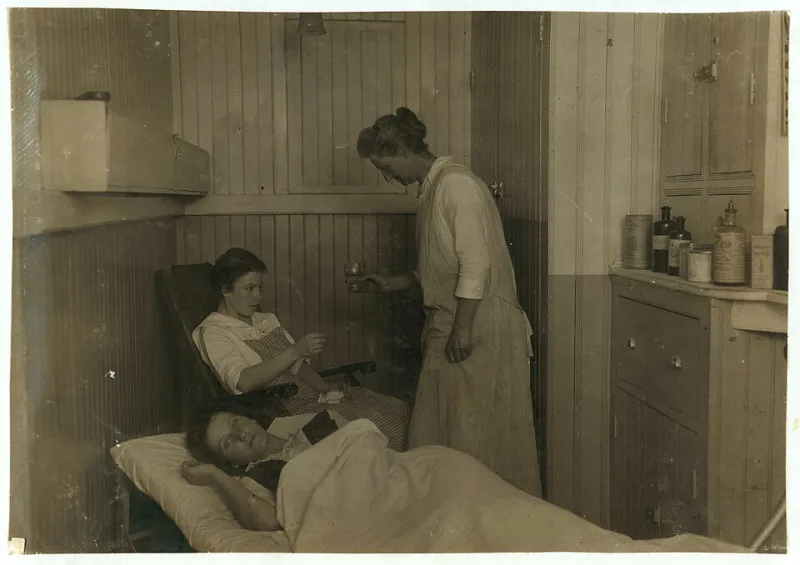
Photo: Hine, Lewis Wickes; National Child Labor Committee Collection, Public domain, via Wikimedia Commons
The Problem With Marcus
Every performance review said roughly the same thing. Brilliant. Impatient. Disruptive. Doesn't respect established procedure.
That last one was the real sticking point. Marcus Hale had graduated near the top of his medical school class, breezed through his residency on raw talent and an almost alarming amount of caffeine, and arrived at his first attending physician position in 1974 ready to work. What he wasn't ready to do was pretend that the emergency room he'd just walked into made any sense.
Because it didn't. Not to him.
Patients arriving in crisis were triaged by whoever happened to be nearest the door. Paperwork moved at a pace that seemed designed for a different century. Nurses, who often had the clearest picture of what was actually happening in the room, were systematically excluded from decision-making conversations. And the doctors — his colleagues, his supposed peers — spoke about the ER's dysfunction with a kind of weary acceptance that Marcus found genuinely baffling.
"This is how it's always been done" was the phrase that made him want to put his fist through a wall.
He lasted fourteen months at his first job. His second position ended after eleven. His third — at a larger regional hospital where he'd hoped the bigger scale might mean more openness to change — dissolved in a tense meeting with an administrator who used the word "insubordinate" three times in six minutes.
Marcus drove home, sat in his apartment, and made a decision that probably looked like career suicide from the outside: he was going to stop trying to fix emergency rooms from inside the system, and start building a better model from scratch.
What Was Actually Broken
To understand what Marcus saw, you have to understand what emergency medicine looked like in the mid-1970s. It wasn't really a specialty at all — not yet. ERs were staffed by rotating physicians from other departments, doctors who'd trained in cardiology or surgery or general practice and were essentially moonlighting in the emergency room. Nobody had designed the environment around emergency care specifically. It had just accumulated, like sediment, over decades.
The consequences were predictable. Response times were inconsistent. Critical cases weren't always identified quickly enough. The handoff between ER staff and inpatient teams was chaotic. And perhaps most damagingly, there was no shared language — no standardized set of protocols that everyone in the room understood and could act on instantly under pressure.
Marcus had catalogued all of this, obsessively, in notebooks he'd been keeping since his residency. He had pages of observations, sketches of room layouts, timing studies he'd done unofficially, tracking how long it took from patient arrival to first physician contact under different staffing configurations. He hadn't been doing this to write a paper. He'd been doing it because he couldn't turn his brain off.
Now, unemployed and thirty-one years old, he had nothing but time to think about what to do with all of it.
Building It in the Margins
Marcus didn't have funding. He didn't have a university affiliation. What he had was a connection to a small community hospital in rural Ohio that was so perpetually understaffed that its administrator was willing to try almost anything if it cost nothing upfront.
He spent six months there, essentially as a volunteer consultant, implementing what he called a "response architecture" — a term he'd invented himself because no existing vocabulary quite fit what he was designing. The core idea was simple but radical: every step in the emergency care process should be standardized, timed, and owned by a specific role. Not a specific person — a role. So that when staff changed, when doctors rotated, when a nurse called in sick, the system kept functioning because everyone understood the framework.
He introduced color-coded triage categories that nurses could assign on arrival without waiting for a physician. He redesigned the physical flow of the intake area to reduce the time between a patient walking in and being assessed. He created a structured handoff protocol — a brief, standardized verbal checklist — for when patients moved between care teams.
Within four months, average time to first assessment dropped by thirty percent. Critical cases were being identified faster. Staff reported feeling less overwhelmed, not because the volume had changed but because the structure had.
Marcus wrote it all up in a thirty-page document and started sending it to anyone who would read it.
The Slow Burn of a Good Idea
Medical culture doesn't move fast. That's partly by design — you want some conservatism in a field where mistakes kill people — and partly by inertia, the same institutional resistance that had gotten Marcus fired three times. His document circulated slowly, passed from administrator to administrator, occasionally landing on the desk of someone who read it carefully and felt the same flicker of recognition Dorothy Leavitt had felt looking at those computing manuals.
By the early 1980s, fragments of his framework were appearing in ER redesign projects in Pennsylvania, Texas, and California. His triage classification system, adapted and refined by others, fed into what would eventually become the standardized five-level triage scale used across American emergency departments today. His handoff protocol became the skeleton of SBAR — Situation, Background, Assessment, Recommendation — a communication framework now taught in virtually every nursing and medical program in the country.
He was never famous. He was never the face of a movement. But emergency physicians who dig into the lineage of their own training often find, somewhere upstream, a set of ideas that trace back to a thirty-one-year-old doctor who couldn't hold a job.
The Gift of Not Fitting In
There's a version of Marcus Hale's story where the firings are the tragedy. Where a gifted physician's career was derailed by a system too rigid to accommodate his vision.
But Marcus himself never saw it that way — or at least, he stopped seeing it that way somewhere around his third cup of coffee on the night he decided to start over.
Being outside the system, he'd later say, was the only thing that let him see the system clearly. When you're inside it, when your paycheck and your status and your professional identity are all tied to the institution functioning as it always has, you develop a powerful unconscious incentive to believe that the way things are is the way they have to be.
Marcus never had that incentive. He'd been shown the door too many times to feel sentimental about the building.
And so he built a different one. Smaller, quieter, less glamorous than the hospitals that had rejected him. But the blueprints traveled. They always do, when they're any good.
What Happens in Those First Minutes
The next time you or someone you love ends up in an emergency room — and statistically, that day will come — watch what happens in the first few minutes. Watch the triage nurse assess the situation quickly and confidently. Watch the handoff between teams, the brief structured exchange of critical information. Watch the way the room moves, not randomly but according to a logic that keeps the most critical cases visible and prioritized.
That logic didn't emerge from a committee. It didn't come from a prestigious research hospital or a landmark clinical trial. It came, in significant part, from a restless, impatient, repeatedly unemployed doctor who simply couldn't stop asking why things had to be this way.
Three firings. One blueprint. Countless lives.