No Diploma, No Problem: The Runaway Kid Who Became Wall Street's Secret Weapon

The Boy Who Left Before the Bell Rang
Somewhere in the industrial Midwest during the early 1920s, a teenager packed a canvas bag, slipped out before sunrise, and walked away from a life that had nothing to offer him. No dramatic goodbye. No plan. Just a vague, burning need to understand something — the thing he'd read about in dog-eared newspaper clippings and secondhand financial bulletins he'd been collecting since he was twelve.
His name was Elton Marsh, and by the time most of his peers were sitting through their first college economics lecture, he had already spent three years sleeping in boarding houses, working odd jobs, and devouring every financial text he could find in the public library systems of four different states.
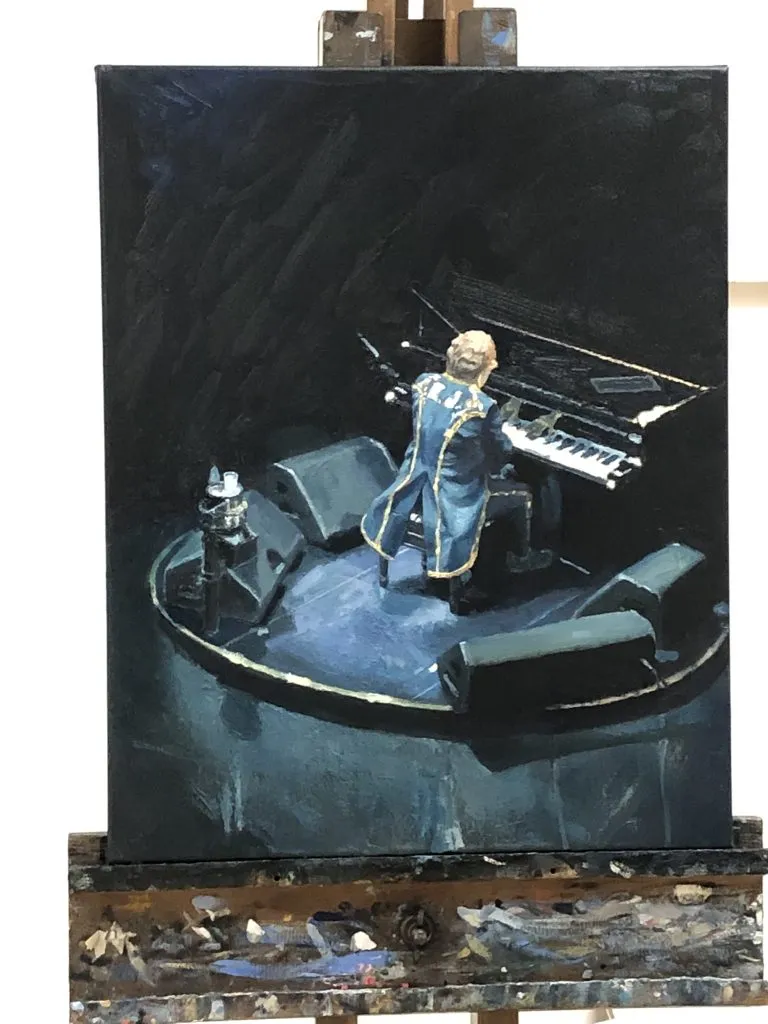 Photo: Elton Marsh, via petemarshart.co.uk
He never enrolled in a single university course. He never sat for a licensing exam. And yet, by the late 1940s, his typewritten market analyses were circulating quietly among some of the most senior investment figures in New York — passed hand to hand like contraband, with no author credit, because the men sharing them knew that if anyone asked where the insight came from, the answer would have been professionally embarrassing.
A Library as a Graduate School
What Marsh had, in place of credentials, was time and obsession. The public library system in early 20th-century America was one of the great democratizing forces in the country's intellectual life, and Marsh used it like a graduate student uses a research database — systematically, hungrily, without any of the social gatekeeping that formal education imposed.
He started with newspapers, moved to annual reports, then worked backward through decades of market data, hand-copying figures into notebooks because he couldn't afford to check out reference volumes. He taught himself basic accounting from a 1911 textbook he found in a Pittsburgh branch library. He learned the mechanics of commodities trading from a pamphlet printed by the Chicago Board of Trade. He read everything, and more importantly, he remembered everything.
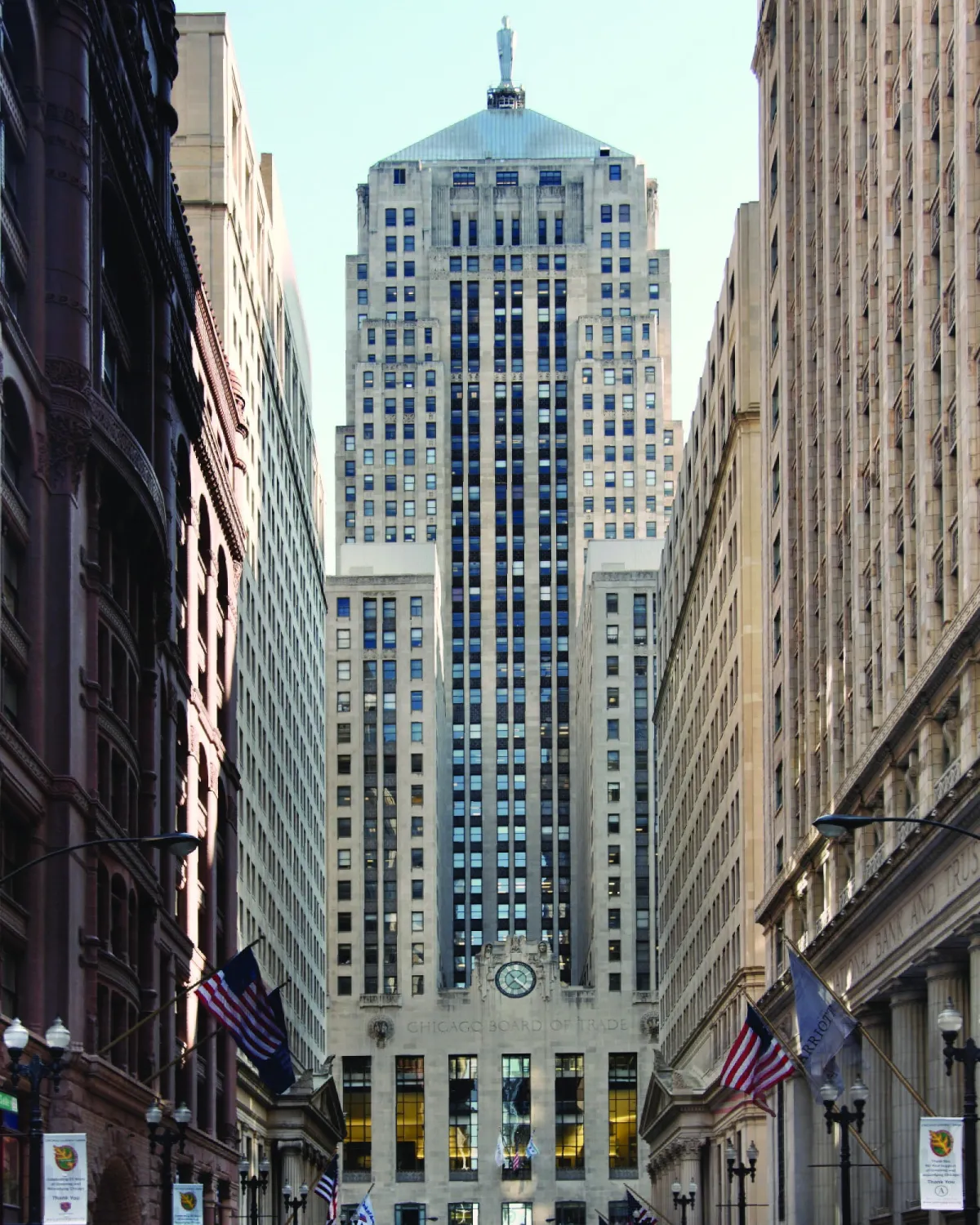 Photo: Chicago Board of Trade, via s3.amazonaws.com
But Marsh's real edge wasn't memory. It was pattern recognition untainted by received wisdom. He hadn't been taught what markets were supposed to do, which meant he had no professional obligation to defend those assumptions. When the data said something that contradicted conventional thinking, he followed the data. It sounds simple. In practice, it's extraordinarily rare.
The Notebook Nobody Was Supposed to See
By his mid-twenties, Marsh was working as a bookkeeper for a regional commodities broker in Cincinnati — a job he'd talked his way into by demonstrating, in a single afternoon interview, that he understood the firm's own ledgers better than the man who'd been maintaining them for six years. His employer, a pragmatic man named Walter Ganz, didn't ask about Marsh's educational background after that conversation. He just handed him the books.
In the evenings, Marsh kept writing. Not for anyone in particular — just for himself, the way someone might keep a journal, except his entries were dense, precise analyses of market behavior, sector trends, and what he called 'the arithmetic of fear': the measurable patterns in how traders responded to uncertainty rather than to actual economic conditions.
Ganz found the notebooks by accident one winter evening and spent four hours reading them before he looked up. The next morning, he asked Marsh if he could share one analysis with a contact in New York. Marsh said yes. He never expected anything to come of it.
The Invisible Analyst
What came of it was a slow, almost underground reputation. The contact in New York passed the analysis to a colleague. That colleague passed it to another. Within two years, Marsh's work — always unsigned, always distributed informally — had reached the desks of fund managers, private bankers, and at least one senior figure at a major insurance company who later admitted he had restructured an entire bond portfolio based on a four-page memo from an anonymous source he'd never met.
The anonymity wasn't entirely by design, but Marsh didn't fight it either. He understood, with the clear-eyed realism of someone who had always existed outside the system, that his insights would be dismissed the moment anyone attached a biography to them. Wall Street in the postwar era ran on credentials and connections. A man who had neither — who had, in fact, run away from home at fifteen and educated himself in public libraries — had no place in that world's official narrative.
So he stayed invisible. And the analyses kept circulating.
What the Credentialed World Kept Missing
The recurring theme in Marsh's work, the thing that made it consistently valuable to the people who quietly depended on it, was his refusal to treat market behavior as a purely rational system. Long before behavioral economics became an academic discipline, Marsh was writing about the emotional architecture of financial decisions — the way that professional training could actually blind analysts to obvious signals by making them too committed to theoretical models.
He called it 'the diploma problem' in one of his later notebooks: the idea that formal education in any field creates a shared set of assumptions so deeply internalized that credentialed professionals stop being able to see around them. The outsider, he argued, sees the edges of the picture that the insider has learned to crop out.
It's a provocative idea, and it's worth noting that it has limits — Marsh himself acknowledged that raw self-education without some form of structured feedback could produce spectacular blind spots of its own. But in his case, the combination of genuine intellectual discipline and complete freedom from professional orthodoxy produced something that the formal system, for all its resources, kept failing to generate: accurate foresight.
A Legacy That Lived in Other People's Footnotes
Marsh never wrote a book. He never gave a lecture. He never appeared in a financial publication under his own name. When he died in 1971, the obituary in his local Ohio paper described him as a retired bookkeeper with an interest in market research. It was technically accurate and almost completely wrong.
The men who had depended on his work for two decades were mostly dead or retired by then, and the informal network through which his analyses had traveled left no paper trail that anyone thought to preserve. His notebooks — dozens of them, spanning forty years of thought — were donated to a regional historical society by a nephew who had no idea what they contained.
A financial historian stumbled across them in the late 1990s and spent three years trying to reconstruct Marsh's story. What she found was a body of work that had quietly shaped decisions worth hundreds of millions of dollars, produced by a man who had never been invited to the table he was feeding.
The story of Elton Marsh isn't really about markets. It's about what happens when genuine curiosity operates without a ceiling — and what we lose when we decide that wisdom can only come from people who can prove where they went to school.
Some of the best thinking in American financial history lived in a canvas bag that left home before sunrise one morning in the 1920s. It just took the rest of us a while to catch up.