Lost the Farm, Found the Future: How One Man's Bankruptcy Built an Agricultural Empire
The Day the Keys Changed Hands
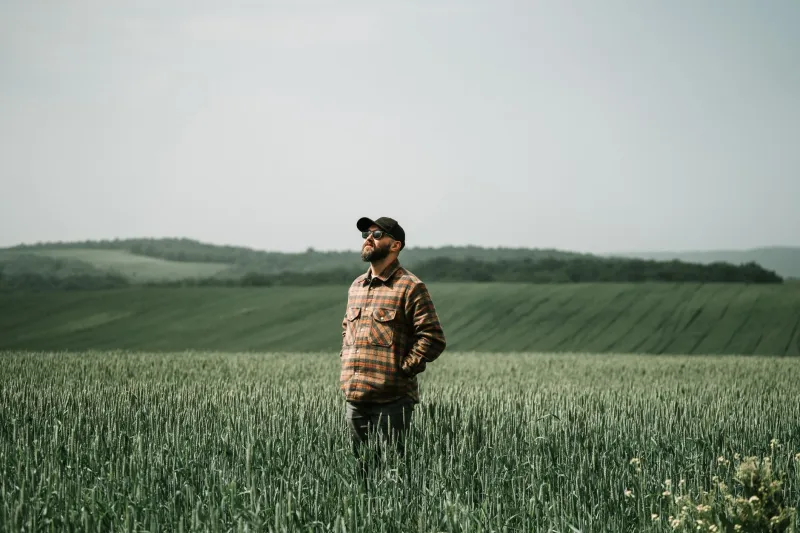
There's a specific kind of grief that comes with losing a farm. It's not just a business closing. It's the end of a relationship with land your family may have worked for generations — a place where the soil itself carries memory. When the foreclosure notice arrived, pinned to the door of a farmhouse somewhere in the middle of America during one of the agricultural sector's periodic collapses, the man who owned that farm didn't have a backup plan. He had a truck, a few thousand dollars in debt, and thirty years of accumulated knowledge about what it actually took to grow something in difficult conditions.
That last part turned out to be worth considerably more than the land.
What Failure Teaches You
Agriculture has a brutal way of educating its practitioners. Every failed crop is a lesson. Every drought, every pest infestation, every market price collapse that leaves you selling at a loss — all of it goes into a kind of knowledge that you can't get from an agronomy textbook or a university extension program. It's embodied knowledge, earned through seasons of watching things go wrong and trying to understand why.
He had all of that. Years of it. And in the wreckage of his foreclosure, he started doing something unusual: he started writing it down. Not for publication, not for any particular audience, but because he needed to understand what had happened to him and to the dozens of other farmers he knew who'd gone through similar collapses.
What he found, working through his own records and talking to neighbors who'd also lost operations, was a pattern. The failures weren't random. They weren't simply the result of bad luck or bad weather or bad market timing — though all of those played a role. They clustered around specific, predictable failure points that the seed companies and agricultural suppliers of the era seemed either unaware of or uninterested in addressing.
The seeds available to small and mid-size farmers were designed, largely, for ideal conditions. They were optimized for the kind of yields that looked impressive in controlled trials. What they weren't optimized for was the messy, variable reality of actual farming — the marginal soil, the unreliable rainfall, the late frosts that didn't show up in the marketing materials.
He knew what farmers actually needed. He'd needed it himself, and hadn't been able to find it.
Bootstrapping From Zero
Starting a seed company with no capital, no land, and a credit history that had just been through a foreclosure is not a conventional business plan. The conventional sources of agricultural financing — banks, government programs, established industry partners — were not exactly lining up to back a bankrupt farmer with an idea.
So he went unconventional.
His early financing came from a patchwork of sources that would make a traditional venture capitalist nervous: small investments from fellow farmers who'd heard him talk about his ideas and recognized something true in what he was saying, a partnership with a regional co-op that gave him access to testing fields in exchange for a share of future revenue, and a series of short-term arrangements with equipment suppliers who were willing to extend credit to someone they believed in, even if the banks weren't.
It was slow. It was precarious. There were stretches where the whole operation was held together by handshake agreements and the goodwill of people who'd known him before the foreclosure and trusted that the failure hadn't broken something essential in him.
It hadn't. If anything, it had clarified him.
Seeds Designed for the Real World
The product philosophy he developed was simple and, at the time, genuinely radical: seeds should be designed for the conditions farmers actually face, not the conditions seed companies wish they faced.
This meant developing varieties specifically adapted to marginal soils. It meant working on drought tolerance not as a secondary characteristic but as a primary design goal. It meant building in resilience to the kind of variable conditions that defined farming in the regions he knew best — the places where the big agricultural companies weren't paying much attention because the yields weren't flashy enough to feature in a sales catalog.
He partnered with university researchers who were doing interesting work in plant genetics but struggling to find commercial partners willing to take their findings to market. He built relationships with farmers who agreed to test new varieties on their actual working land — not trial plots, but real fields with real stakes — and who gave him honest feedback that shaped the next generation of development.
The results weren't immediate. Good seed development is measured in seasons, not quarters. But within a few years, something remarkable was happening: the farmers who were using his varieties were seeing meaningful improvements in yield consistency under adverse conditions. Not just in good years, but in the hard ones. Especially in the hard ones.
The Disruption Nobody Saw Coming
The established players in the seed industry didn't take him seriously at first. He was a small regional operation, running on unconventional financing, selling to farmers in markets the big companies weren't prioritizing. Easy to dismiss.
What they missed was that those farmers talked to each other. Agricultural communities are networks of relationships that move information faster and more reliably than any marketing campaign. When something works — really works, in the field, in the bad years — word gets around. His customer base grew not through advertising but through the oldest distribution channel in human history: one farmer telling another that something had actually helped.
By the time the industry took notice, he had built something that was surprisingly difficult to replicate. Not because of proprietary technology or patent walls, though those came eventually, but because of the relationships. The trust. The years of honest feedback loops between his company and the farmers who'd helped shape its products.
You can't buy that. You can only earn it, slowly, by being right about what people need when it matters most.
What Losing Everything Actually Cost Him
He's said, in the few interviews he's given over the years, that losing the farm was the worst thing that ever happened to him and the most important. Not in the motivational-poster sense — not as a convenient narrative of adversity overcome. In the literal sense that the experience gave him knowledge he couldn't have gotten any other way.
He knew what it felt like to watch crops fail because the seeds weren't built for the conditions. He knew the specific desperation of a farmer trying to make a payment with a harvest that had come in short. He knew, from the inside, the gap between what the industry was selling and what the industry's customers actually needed.
That gap was his company. His bankruptcy, in the end, was his most valuable asset — because it had taught him exactly where to build.