From Prison Cell to Supreme Court: The Drifter Who Rewrote Justice in America
The Petition That Changed Everything
The letter arrived at the Supreme Court on January 8, 1962, written in pencil on lined paper torn from a prison tablet. The handwriting was careful but unpracticed, the grammar imperfect, the legal terminology sometimes wrong. Most such letters end up in the trash.
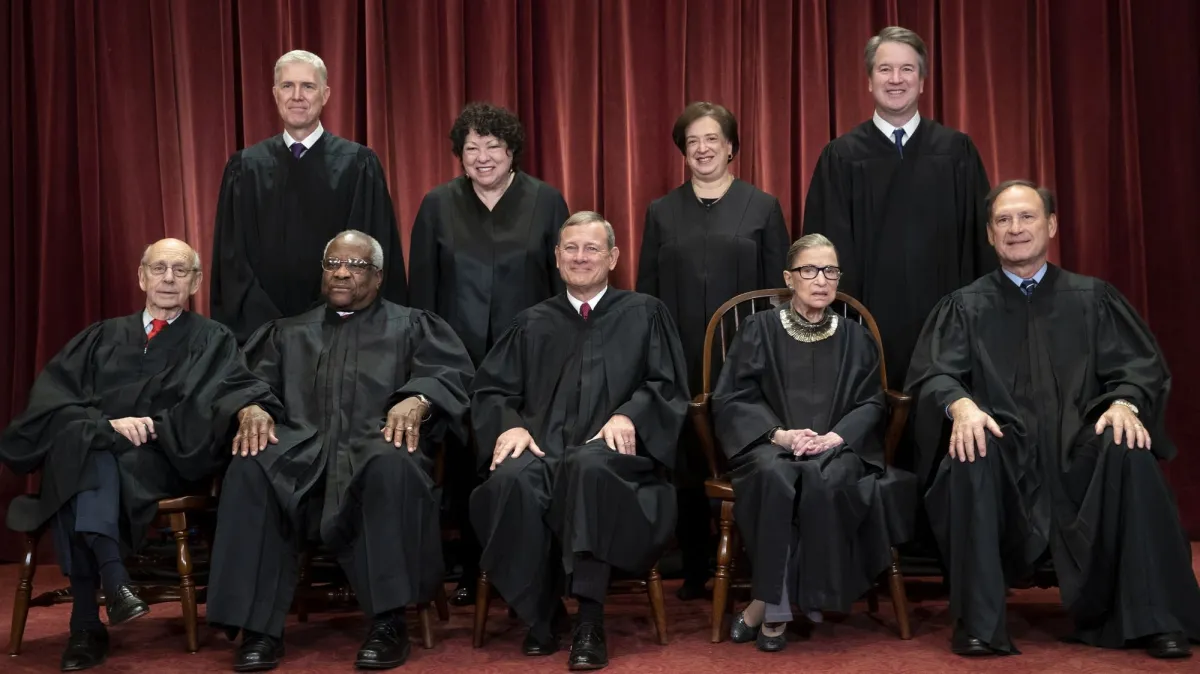 Photo: Supreme Court, via img.apmcdn.org
This one rewrote American justice.
"The United States Supreme Court Not," it began, with a crossed-out "Not" corrected to "Note." The author was Clarence Earl Gideon, prisoner #003826 at Florida State Prison, and he was about to prove that sometimes the most profound changes in law come not from Harvard classrooms or corporate boardrooms, but from a man with nothing to lose and everything to learn.
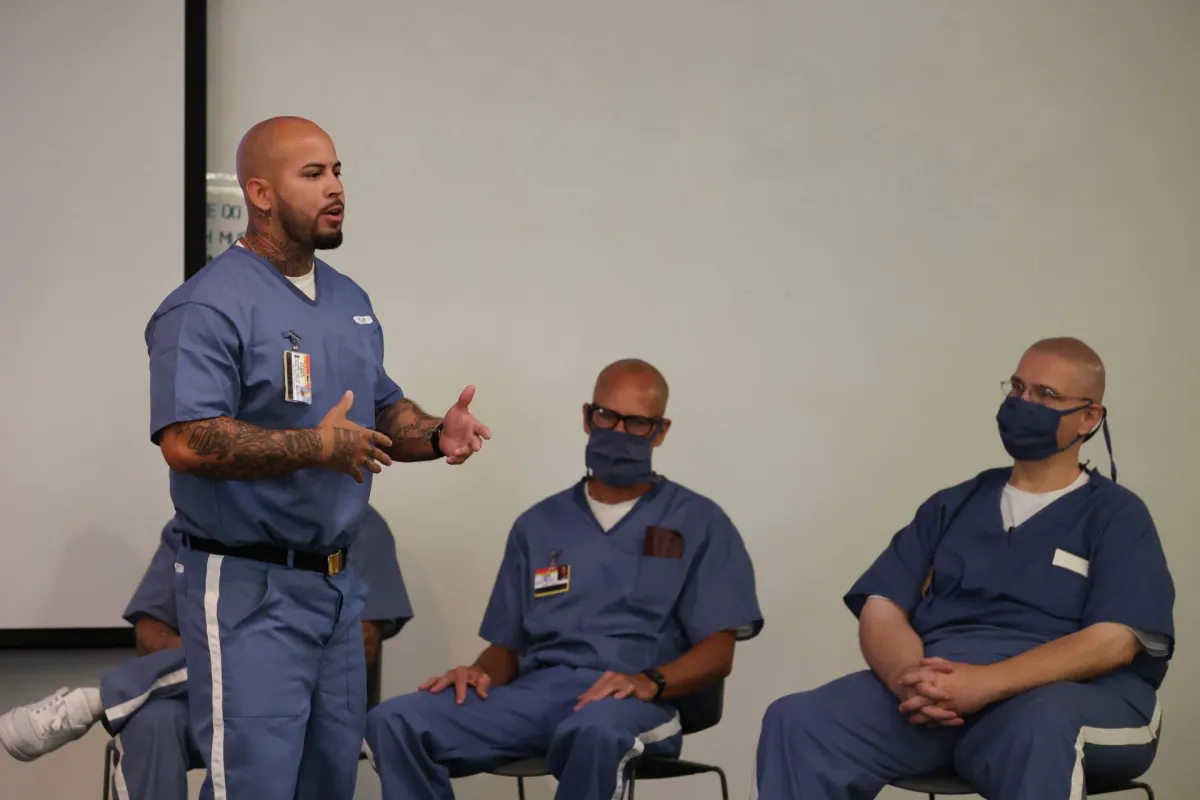 Photo: Florida State Prison, via theprisondirect.com
Gideon was asking the highest court in America to overturn his conviction for breaking into a pool hall and stealing some beer, wine, and coins from a cigarette machine. Total value: about sixty dollars. But his petition wasn't really about the money. It was about something far more valuable: the right to a fair trial.
The Man Who Fell Through Every Crack
Clarence Earl Gideon was nobody special—at least, that's what everyone thought, including Gideon himself. Born into poverty in Missouri in 1910, he'd spent most of his adult life drifting between odd jobs and petty crimes. He'd been in and out of prison since he was a teenager, never for anything violent or particularly clever, just the small-time offenses of a man who couldn't seem to find his place in the world.
His eighth-grade education had ended when he ran away from home. His marriages had failed. His jobs never lasted. By 1961, at age fifty-one, he was exactly the kind of person society had written off as hopeless.
Then came the night that changed everything—not just for Gideon, but for every American who would ever face criminal charges.
The Trial That Wasn't Fair
On June 3, 1961, someone broke into the Bay Harbor Pool Room in Panama City, Florida. A witness claimed he saw Gideon near the building that morning, and police arrested him for the break-in. When Gideon appeared in court, he made a simple request that seemed perfectly reasonable to him: he asked for a lawyer.
Judge Robert McCrary Jr. denied the request. Under Florida law, the state only had to provide attorneys for defendants charged with capital crimes. Since Gideon was only facing a felony charge that might result in prison time, he was on his own.
"I'm not prepared to try this case," Gideon protested. "I don't know the law."
"I'm sorry, but I cannot appoint counsel to represent you in this case," the judge replied.
So Gideon, with no legal training whatsoever, was forced to defend himself against a trained prosecutor. The outcome was predictable: guilty on all counts, sentenced to five years in state prison.
Most men would have accepted their fate. Gideon went to the prison library and began to study.
The Education of a Jailhouse Lawyer
Florida State Prison had a decent law library, and Gideon became its most dedicated student. Day after day, he pored over legal texts, trying to understand concepts that law students spend years mastering. He read about constitutional rights, procedural law, and precedent. He studied the language of legal briefs and the structure of appeals.
Slowly, painstakingly, Gideon began to understand that his trial had been fundamentally unfair—not because of any personal vendetta, but because the system itself was rigged against poor defendants. The Sixth Amendment guaranteed the right to counsel, but what good was that right if you couldn't afford to exercise it?
The more he read, the more convinced he became that the Supreme Court needed to hear his case. Not because he was innocent (though he maintained he was), but because the principle at stake was bigger than any individual defendant.
David vs. Goliath in Pencil and Paper
Gideon's petition to the Supreme Court was a masterpiece of determination over education. He cited the wrong cases, used imperfect legal language, and made arguments that would have earned a failing grade in any law school. But buried in those five handwritten pages was a constitutional argument so compelling that the justices couldn't ignore it.
The core of his argument was beautifully simple: "The United States Constitution not only guarantees me these rights but it is the supreme law of the land, and the state of Florida is bound to abide by it." He was asking the Court to rule that all defendants, not just those facing death sentences, had the right to legal representation.
What made Gideon's petition remarkable wasn't its legal sophistication—it was its moral clarity. Here was a man with every reason to be cynical about the justice system, yet he still believed the Constitution meant what it said.
When the Highest Court Said Yes
On June 1, 1962, the Supreme Court announced it would hear Gideon v. Wainwright. The decision sent shockwaves through the legal community. The Court receives thousands of petitions each year and agrees to hear fewer than one percent of them. For a handwritten petition from a prison inmate to make the cut was virtually unprecedented.
The Court appointed Abe Fortas, one of Washington's most prestigious lawyers and a future Supreme Court justice himself, to argue Gideon's case. The irony was perfect: the man who couldn't get a lawyer for his original trial now had one of the best attorneys in America.
Fortas understood immediately that this case was about much more than Clarence Earl Gideon. It was about the meaning of equal justice under law. If the Constitution guaranteed the right to counsel, that right couldn't depend on your ability to pay for it.
The Decision That Echoes Still
On March 18, 1963, the Supreme Court ruled unanimously in Gideon's favor. Justice Hugo Black, writing for the Court, declared that the right to counsel was "fundamental and essential to fair trials" and that states must provide attorneys for all defendants facing serious criminal charges, regardless of their ability to pay.
The decision was a legal earthquake. Overnight, thousands of convictions were thrown into question. States scrambled to create public defender systems. Law schools began training attorneys for indigent defense work. The entire landscape of criminal justice shifted.
But perhaps the most satisfying moment came when Gideon got his new trial. This time, with a real attorney representing him, the jury took less than an hour to find him not guilty. The same evidence that had convicted him when he represented himself was insufficient when a trained lawyer could challenge it properly.
The Ripple Effects of One Man's Courage
The Gideon decision created the modern public defender system that protects millions of Americans today. Every time a poor defendant gets a court-appointed lawyer, they're benefiting from Clarence Earl Gideon's stubborn refusal to accept an unfair system.
But the case's importance goes beyond criminal law. It established the principle that constitutional rights must be meaningful for everyone, not just those with resources. It affirmed that in America, your access to justice shouldn't depend on your bank account.
The Man Behind the Precedent
After his acquittal, Gideon tried to stay out of trouble, but old habits die hard. He was arrested several more times for minor offenses and died in 1972, largely unknown outside legal circles. He never fully understood how profoundly his case had changed American law.
In many ways, Gideon remained the same small-time drifter he'd always been. But for one shining moment, his belief in American justice burned bright enough to illuminate a fundamental flaw in the system—and his courage in challenging that flaw made the system fairer for everyone who came after.
When the Powerless Find Their Voice
Gideon's story reminds us that constitutional principles mean nothing unless ordinary people are willing to fight for them. He had every excuse to give up: no education, no money, no connections, no reason to believe the system would listen to him.
Instead, he picked up a pencil and wrote his way into history.
His legacy lives on in every public defender's office, every court-appointed attorney, every poor defendant who gets a fair trial because someone believed they deserved one. Clarence Earl Gideon proved that in America, justice isn't just for those who can afford it—it's for everyone brave enough to demand it.
Sometimes the most powerful voice in the room belongs to the person everyone else has stopped listening to. Sometimes the most important legal briefs are written in pencil on prison paper. And sometimes the Constitution's greatest defenders are people who learned about it the hard way—by watching it fail them, then refusing to let it fail anyone else.