Against All Odds: The Woman Who Earned Her Medal of Honor Twice

The Doors That Wouldn't Open
In 1850s America, if you were born female and dreamed of becoming a doctor, you were dreaming the impossible. Medical schools had one policy regarding women applicants: absolute refusal. No exceptions, no explanations needed.
Mary Edwards Walker learned this the hard way. Born on a farm in upstate New York to progressive parents who believed education belonged to everyone, she had set her sights on medicine from childhood. Her father, a self-taught doctor himself, encouraged her ambitions. Her teachers praised her intellect. But when she began applying to medical schools, reality struck with brutal clarity.
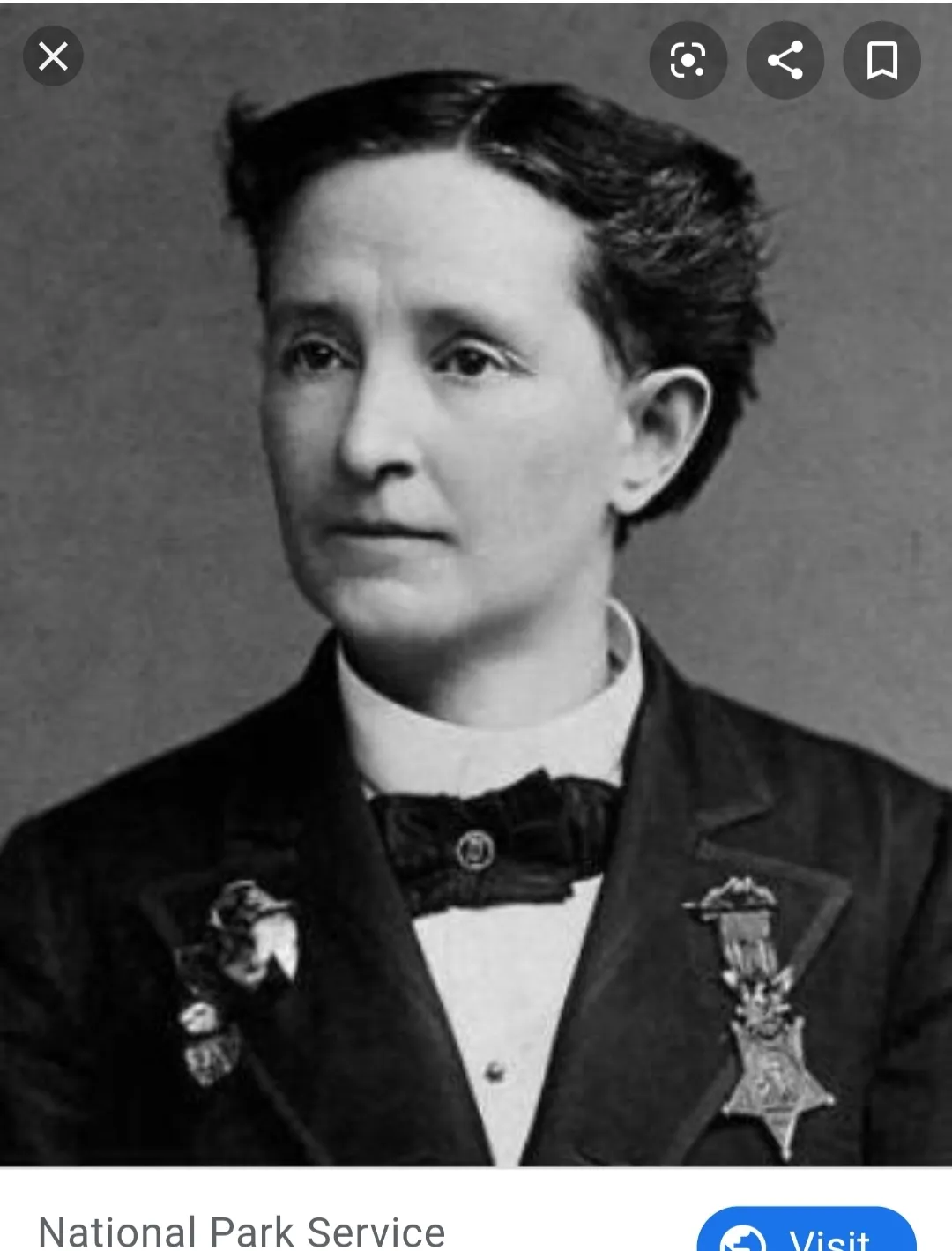 Photo: Mary Edwards Walker, via theexasperatedhistorian.com
Rejection after rejection arrived in her mailbox. Some schools didn't even bother responding. The few that did made their position crystal clear: medicine was a man's profession, and they intended to keep it that way.
Most young women would have accepted defeat and chosen a more "appropriate" path. Mary Edwards Walker chose to cross an ocean instead.
The Journey to Syracuse
When American institutions wouldn't have her, Walker discovered that Syracuse Medical College—one of the few "eclectic" medical schools of the era—was willing to admit women. It wasn't exactly mainstream medicine; eclectic schools focused on natural remedies and less invasive treatments. But it was accredited, legitimate, and most importantly, open to her.
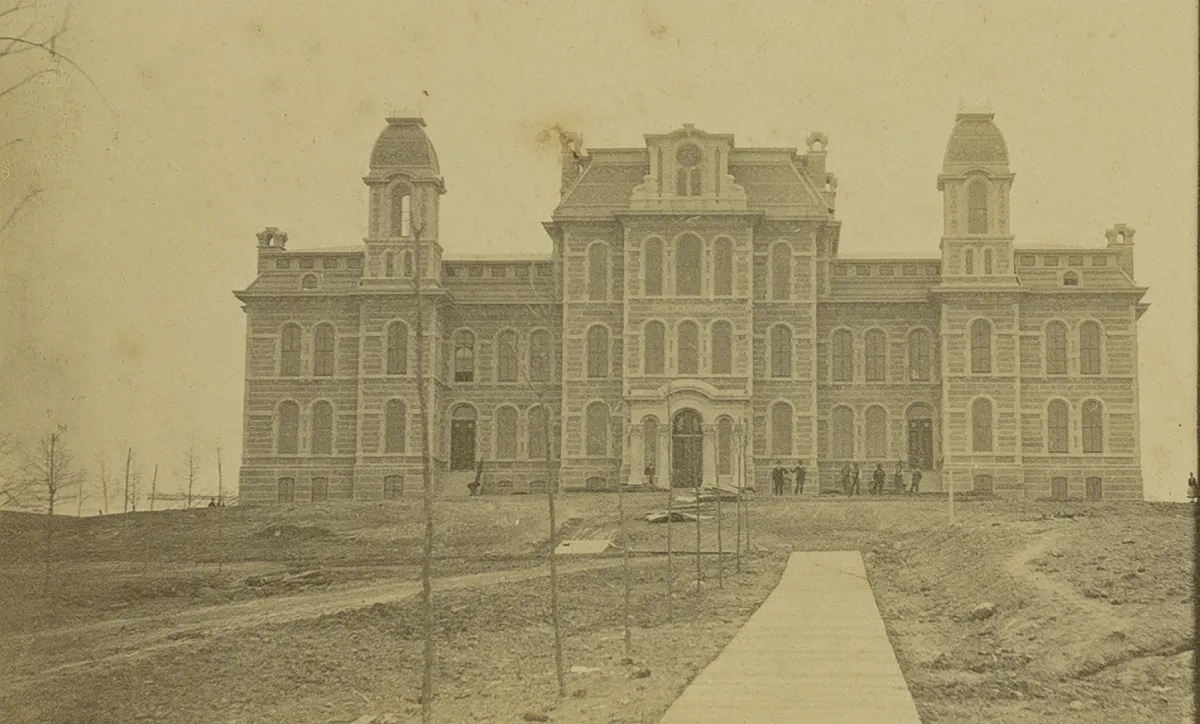 Photo: Syracuse Medical College, via artsandsciences.syracuse.edu
Walker threw herself into her studies with the intensity of someone who knew she might not get a second chance. She graduated in 1855, becoming one of the first women physicians in American history. But earning the degree was only the beginning of her struggles.
Trying to establish a practice as a female doctor proved nearly impossible. Patients wouldn't trust her. Male physicians ostracized her. Even her own marriage suffered—her husband, also a doctor, expected her to abandon her career and support his instead.
Walker had other plans. She divorced her husband (scandalous for the era), maintained her maiden name (even more scandalous), and continued practicing medicine despite the obstacles. Then the Civil War erupted, and everything changed.
Where Bullets Flew and Prejudice Died
When the war began in 1861, the Union Army desperately needed medical personnel. They needed them so badly that they were almost willing to overlook the fact that Walker was a woman. Almost.
Initially, the Army refused to commission her as a surgeon, despite her qualifications. Instead, they grudgingly allowed her to volunteer as a civilian physician. Walker accepted, figuring that battlefield competence would eventually overcome bureaucratic prejudice.
She was right, but the process took years of proving herself under fire.
Walker served at the Battle of Bull Run, the Battle of Chickamauga, and numerous other engagements. She treated wounded soldiers regardless of which uniform they wore—a practice that would later get her captured by Confederate forces. For four months, she endured harsh conditions in a Confederate prison, refusing to compromise her principles even when threatened.
The Moment Everything Changed
The breakthrough came during the Battle of Atlanta in 1864. The Union Army's medical corps was overwhelmed with casualties, and Walker found herself performing complex surgeries under impossible conditions. Working for days without rest, she saved dozens of lives that would have been lost without her intervention.
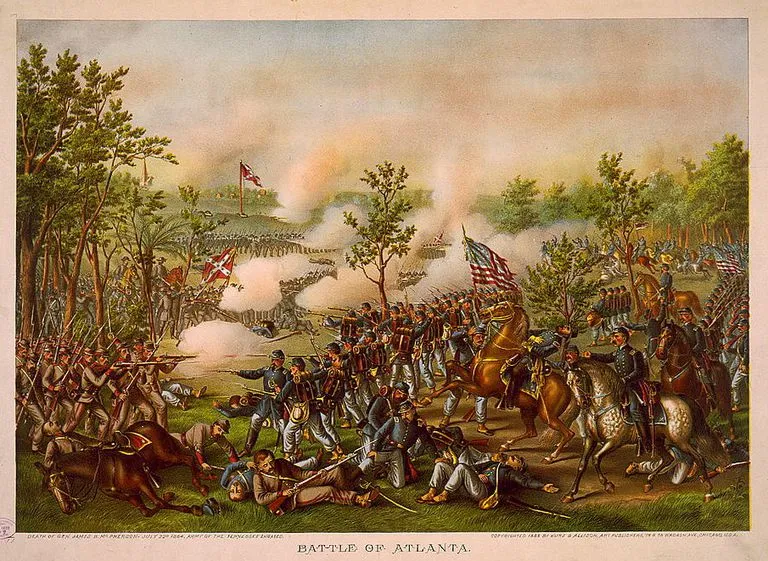 Photo: Battle of Atlanta, via www.thoughtco.com
After the battle, something unprecedented happened: the commanding officers formally requested that she be commissioned as a military surgeon. Not as a volunteer, not as an assistant, but as a full surgeon with officer rank.
The War Department, finally forced to acknowledge her competence, agreed. Walker became the first woman ever commissioned as a military surgeon in U.S. history.
But her greatest recognition was still to come.
The Medal That Made History
On November 11, 1865, President Andrew Johnson signed a citation awarding Mary Edwards Walker the Congressional Medal of Honor—the military's highest decoration for valor. The citation praised her "patriotic zeal" and "valuable service to the Government."
She was the first woman ever to receive the honor. As it turned out, she would also be the last for more than 150 years.
Walker wore her medal proudly for the rest of her life. She understood its significance not just as personal recognition, but as proof that women could serve their country with the same courage and competence as men.
Then, in 1917, Congress decided to review all Medal of Honor recipients and "purify" the award. In a bureaucratic reshuffling that reflected changing attitudes about military honors, they rescinded 911 medals, including Walker's. The official reason was that the medal should only go to those who had engaged in "actual combat with the enemy."
Walker's response was characteristically defiant: she refused to return the medal and continued wearing it until her death in 1919.
The Century-Long Fight for Justice
For decades after Walker's death, her story faded from public memory. The woman who had broken barriers and saved lives became a footnote in Civil War histories, if she was mentioned at all.
But her legacy had champions. Women's rights activists, military historians, and Walker's own descendants kept her story alive. They pointed out the obvious injustice: Walker had served under enemy fire, had been captured and imprisoned, and had performed surgery while bullets flew around her. If that wasn't combat service, what was?
The campaign to restore her medal gained momentum during the women's liberation movement of the 1960s and 1970s. Finally, in 1977—58 years after her death—President Jimmy Carter signed legislation restoring Walker's Medal of Honor.
The ceremony was both triumphant and melancholy. Justice had been served, but it had taken more than a century.
The Price of Being First
Walker's life illustrates both the possibilities and the costs of being a trailblazer. She achieved things that seemed impossible for a woman of her era: she became a doctor, served as a military officer, and earned the nation's highest military honor.
But she paid a heavy price. She spent her life fighting battles that her male colleagues never had to consider. She endured ridicule, ostracism, and official discrimination. Even her moment of greatest triumph—receiving the Medal of Honor—was later taken away by bureaucrats who couldn't imagine that a woman deserved such recognition.
Legacy of Quiet Revolution
Walker's story resonates because it captures something essential about American progress: it often comes from individuals who refuse to accept the limitations others try to impose on them. She didn't wait for permission to pursue her dreams. When American medical schools wouldn't have her, she found one that would. When the Army wouldn't commission her, she served anyway until they had no choice but to recognize her competence.
Her restored Medal of Honor sits in the Pentagon today, a reminder that justice, while sometimes slow, can eventually prevail. More importantly, her story reminds us that the barriers we think are permanent often crumble when confronted with sufficient determination and skill.
Mary Edwards Walker proved that the only thing more powerful than institutional prejudice is individual excellence. She earned her place in history twice—once on Civil War battlefields, and again in the long fight for recognition that followed. Both victories required the same qualities: courage, persistence, and an unshakeable belief that merit should matter more than gender.
In a nation built on the idea that anyone can achieve greatness, Walker's story stands as proof that sometimes "anyone" includes people the establishment never expected to succeed.