The crowd at Cincinnati's League Park was buzzing with anticipation in 1888. But for William "Dummy" Hoy, stepping into the batter's box meant entering a world of complete silence. No crack of the bat, no roar of approval, no called strikes echoing across the diamond.
At 26, Hoy had already been told countless times that professional baseball wasn't for someone like him. Born hearing, he'd lost that sense at age three after a bout with meningitis. In an era when many deaf people were institutionalized or hidden away, the idea of a deaf man competing at the highest levels of America's national pastime seemed impossible.
Yet there he stood, 5'4" and 148 pounds, ready to prove that the game belonged to anyone brave enough to claim it.
The Problem That Became a Solution
Hoy's deafness created an immediate challenge that no one in baseball had faced before. How do you know if a pitch is a ball or strike when you can't hear the umpire's call? How do you communicate with teammates during the chaos of a live play?
Most people would have seen these as insurmountable obstacles. Hoy saw them as puzzles waiting to be solved.
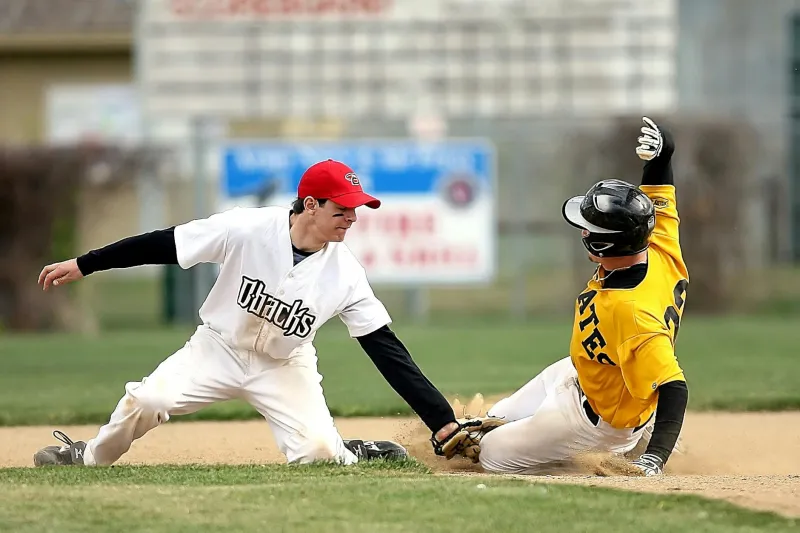
Working with umpires and teammates, he developed a system of hand signals that could communicate every essential piece of information on the field. A raised right hand meant strike. Left hand up signaled a ball. Both hands raised indicated a foul ball. For safe and out calls, umpires began using the dramatic gestures we recognize today — arms spread wide for safe, thumb jerked skyward for out.
What started as accommodation became revolution. Other players, coaches, and fans quickly realized these visual signals made the game clearer for everyone. No longer did spectators in the cheap seats have to guess what the umpire had called. No longer did players miss crucial information in the din of a packed stadium.
More Than Just Surviving
Hoy didn't just adapt to professional baseball — he dominated it. Over his 14-season career, he compiled statistics that would make any player proud: a .287 batting average, 2,054 hits, and 594 stolen bases. He threw out three runners at home plate in a single game, a feat so rare it's been accomplished only a handful of times in baseball history.
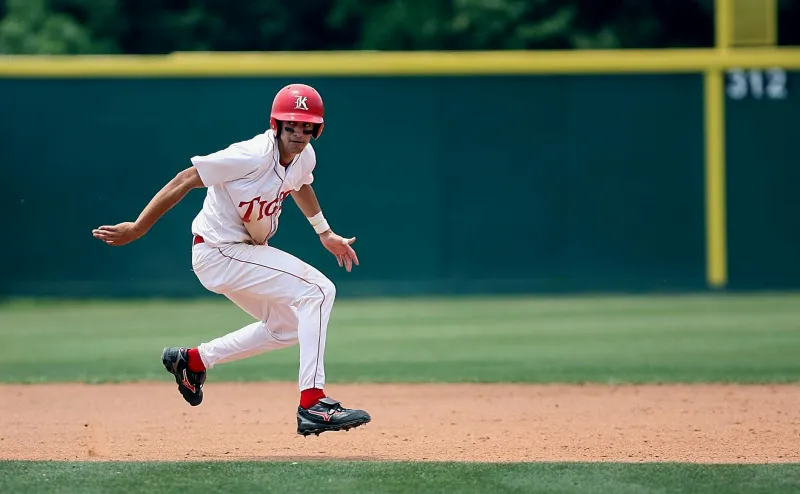
Playing primarily center field, Hoy became known for his incredible speed and defensive instincts. His ability to read the game visually — watching the pitcher's motion, the batter's stance, the flight of the ball — was unmatched. What others thought of as a limitation had become his greatest strength.
In 1889, he became the first player to steal second base, third base, and home in a single inning. The crowd may have been silent in his world, but his performance spoke volumes.
The Language That Outlasted the Legend
Perhaps most remarkably, Hoy's innovations became so fundamental to baseball that they outlived not just his playing career, but his memory. For decades, baseball historians debated whether the hand signals umpires used had really originated with a deaf player from the 1880s. The story seemed almost too perfect — too neat an example of necessity breeding innovation.
But the evidence kept mounting. Contemporary newspaper accounts described umpires adapting their calls for "the deaf-mute player." Other players from Hoy's era confirmed that the signals had indeed started with him. What had begun as one man's accommodation had become the universal language of America's pastime.
Today, every Little League game, every World Series contest, every pickup game in a neighborhood park uses the communication system that William Hoy pioneered. Millions of fans understand what's happening on the field because of innovations born from one man's refusal to let silence keep him from the game he loved.
The Quiet Revolutionary
Hoy retired from professional baseball in 1902, but his influence extended far beyond the diamond. He became a successful businessman, a devoted family man, and an advocate for deaf education. He lived to be 99 years old, long enough to see Jackie Robinson break baseball's color barrier and to witness the sport evolve in ways he could never have imagined.
Yet through all those changes, the hand signals remained. Every umpire who raises his right hand to call a strike, every fan who watches that gesture to understand the game's rhythm, participates in William Hoy's quiet revolution.
In a sport obsessed with statistics and records, Hoy's greatest achievement can't be measured in numbers. He proved that the people society counts out are often the ones who end up changing the rules entirely. He showed that accommodation doesn't mean settling for less — sometimes it means creating something better for everyone.
The next time you're at a ballpark and you see an umpire's dramatic safe call or watch a pitcher and catcher communicate through signs, remember the small man from Ohio who couldn't hear the crowd's roar but taught the whole game a new way to speak.
Some revolutions announce themselves with thunder. Others whisper their way into permanence, one gesture at a time.