Born to Be Told No: The Rodeo Queen Who Rewrote the Rules From the Back of a Horse
The Dust, the Crowd, and the Woman They Didn't Expect
Picture a rodeo arena in the late 1920s. The smell of sawdust and livestock. A crowd pressed tight against the rails, hats tilted against the afternoon sun. The announcer's voice crackling through a tinny speaker system. And then, erupting from the gate at full gallop, a small woman in an embroidered shirt hanging backward off a horse at thirty miles an hour, one foot hooked in the stirrup, her hair streaming parallel to the ground.
The crowd, which had come expecting to be mildly entertained between the bull riding and the calf roping, went completely silent for exactly one second before it exploded.
That woman was Tad Lucas, and for two decades she was arguably the most celebrated trick rider in the country. She performed at Madison Square Garden. She headlined the Fort Worth Fat Stock Show. She toured with some of the biggest rodeo productions of the era and drew audiences who came specifically to watch her do things that male riders openly refused to attempt.
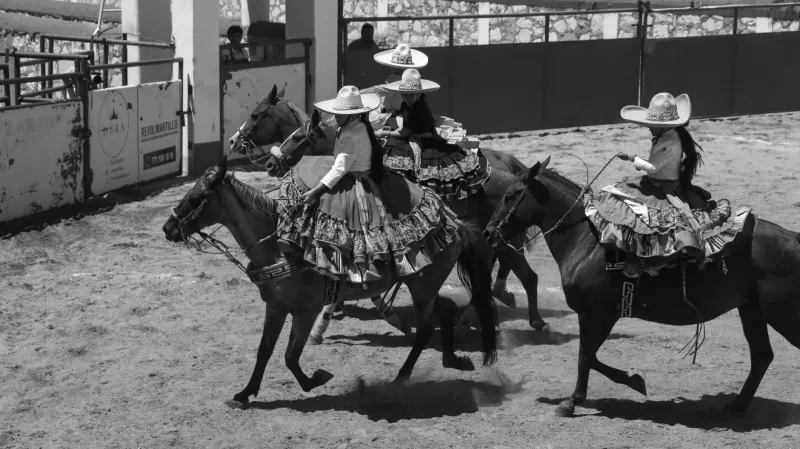
 Photo: Madison Square Garden, via 1.bp.blogspot.com
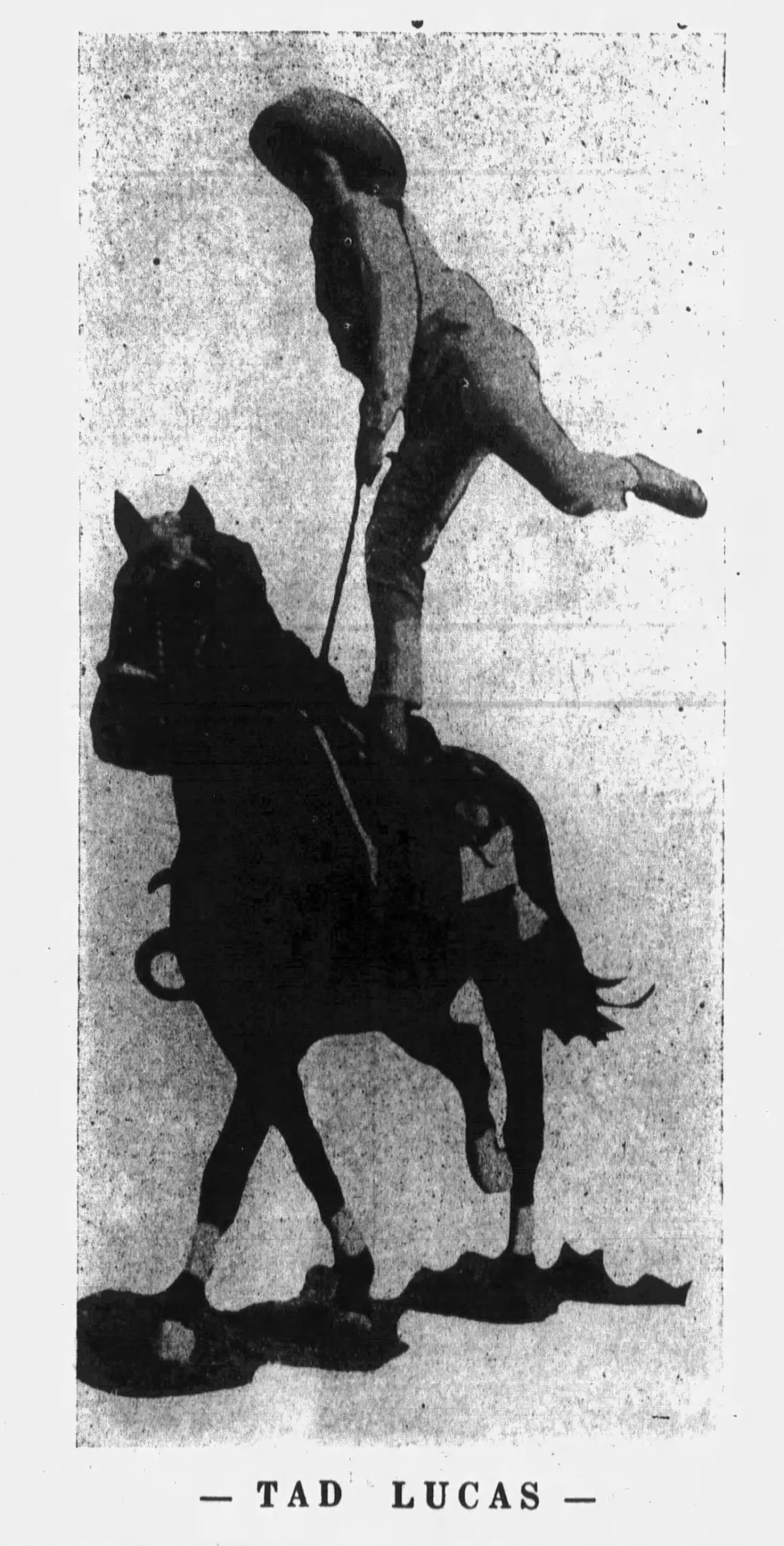 Photo: Tad Lucas, via theactivehistorian.com
And then, with the strange efficiency that American popular culture applies to women who don't fit the story it prefers to tell, she was quietly set aside. Today, most people who consider themselves rodeo fans have never heard her name.
A Nebraska Childhood That Pointed One Direction
Born Barbara Inez Barnes in 1902, she grew up on a Nebraska farm as one of twenty-four children — a fact that sounds apocryphal until you look it up and discover it's entirely true. Life on that farm was not gentle, but it did two things for her: it made her physically tough in a way that no amount of deliberate training could replicate, and it put her on horseback before she could reliably spell her own name.
She was performing at local events by her early teens, doing the kind of riding that made older cowboys stop and watch without quite knowing why. What she had wasn't just skill — it was a particular quality of fearlessness that read differently on her than it would have on a man, because the world had not built a box for it. There was no category for what she was doing, which meant she had to build the category herself.
She married rodeo cowboy Buck Lucas in the early 1920s and took the nickname Tad, which stuck. Buck recognized what he had in his wife and, to his considerable credit, spent much of the rest of his life making sure she had the horses, the training time, and the logistical support to become the rider she was already becoming.
The Stunts That Made Grown Men Step Back
Trick riding in that era was not a soft discipline. It involved performing acrobatic maneuvers on a horse moving at full gallop — hanging off the side, vaulting from the saddle, standing on the horse's back, draping yourself under the animal's neck while its hooves threw up clods of arena dirt inches from your face.
Lucas did all of that, and then she kept going. She developed and performed stunts that had no established names because nobody had done them before. One of her signature moves involved a backward drag under the horse's belly at full speed — a maneuver that required the kind of core strength, timing, and nerve that most professional athletes today, in any sport, would look at and quietly decline.
She competed in an era when rodeo organizations were actively debating whether women should be allowed to compete alongside men at all. The arguments against it were exactly what you'd expect: too dangerous, too unladylike, bad for ticket sales. The arguments were consistently undermined by the fact that wherever Tad Lucas performed, ticket sales went up.
The crowd didn't care about the politics. The crowd cared that she was doing something they had never seen and couldn't quite believe was physically possible, and that she was doing it with a composure that made it look, somehow, almost easy.
Rebellion Dressed as Entertainment
There's a version of Tad Lucas's story that frames her purely as an entertainer — a talented woman who found a niche and exploited it well. That version isn't wrong, exactly, but it misses something important.
Every time she rode into that arena, she was making an argument. Not with words, not with protests, not with the kind of explicit political statement that history tends to recognize and record — but with her body, at thirty miles an hour, in front of thousands of people who had been told that women didn't belong there. She was showing them, repeatedly and undeniably, that the premise was false.
The audiences who came to gawk — and some of them absolutely came to gawk, drawn by the spectacle of a woman doing something dangerous in a world that was supposed to protect women from danger — often left having been genuinely converted. Not to any abstract principle, but to her specifically. To the reality of what they had just watched with their own eyes.
That's a particular kind of power, and Lucas wielded it with what appears, from the historical record, to have been complete intentionality. She understood exactly what she was doing and what it meant.
The Records She Set, the Story That Didn't Survive
By the time she retired in the 1950s, Lucas had accumulated a collection of championship titles that would be remarkable for any athlete of any era. She won the trick riding championship at Cheyenne Frontier Days multiple times. She was a fixture at the Boston Garden Rodeo. She performed internationally. She trained other riders, including her daughter Mitzi, who went on to become a champion in her own right.
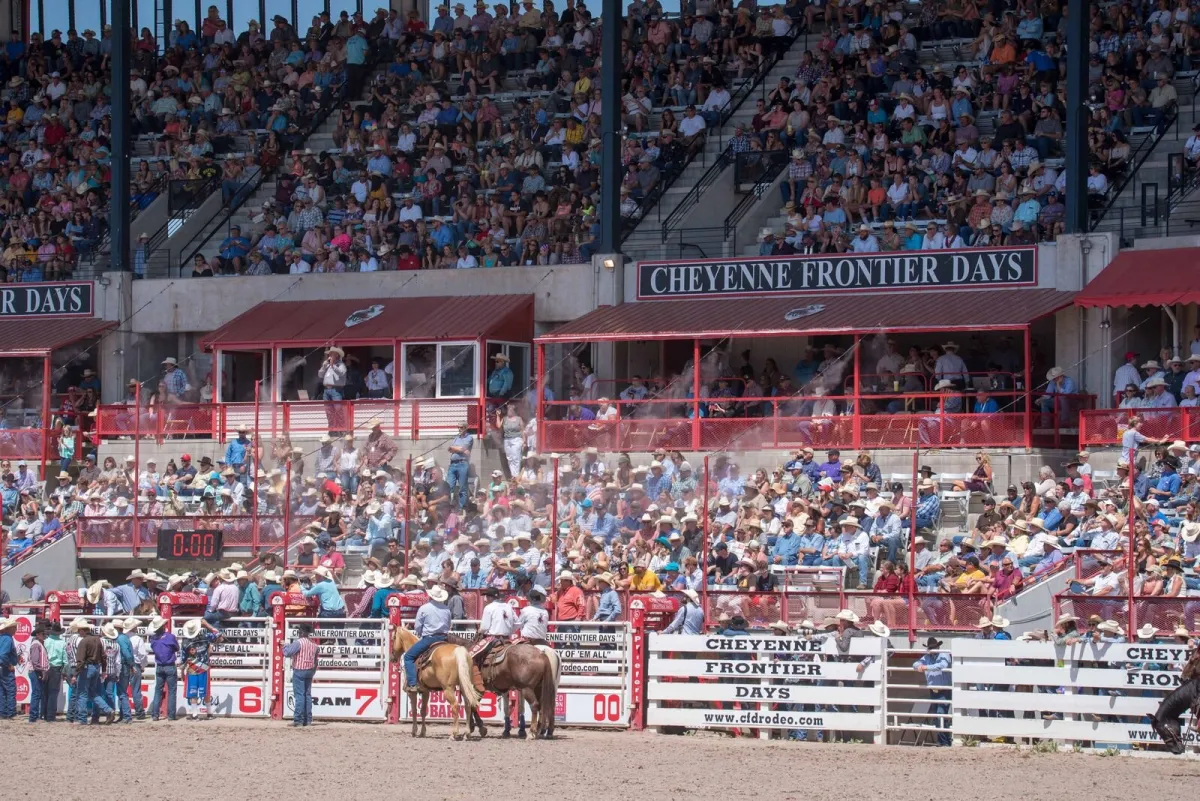 Photo: Cheyenne Frontier Days, via images.squarespace-cdn.com
She was inducted into the National Cowboy Hall of Fame in 1978, which sounds like the kind of recognition that should anchor a legacy. But hall of fame plaques don't generate the cultural momentum that keeps a story alive in the public imagination. They mark the end of the conversation rather than the continuation of it.
The reasons for her erasure from mainstream American history are not mysterious. Women's athletic achievements from that era were systematically undervalued and under-documented. Rodeo itself drifted from the cultural center toward the margins. And trick riding, which had been a headlining event, gradually became a sideshow.
But none of that changes what she actually did, or what it meant.
What the Bleachers Couldn't Hold
Tad Lucas died in 1990 at the age of eighty-eight, which means she lived long enough to see several waves of the feminist conversation that her career had quietly prefigured by decades. Whether she thought of herself in those terms is not entirely clear from the record. What is clear is that she spent her life doing something she was told she couldn't do, doing it better than the people who told her that, and drawing enormous crowds in the process.
The bleachers were where they wanted her. She chose the arena instead.
That choice, made on a Nebraska-raised nerve and an embroidered shirt, belongs in the American story — not as a footnote, but as a headline.