No Seat at the Table? He Built the Whole Restaurant: How Lamar Hunt Changed American Football Forever
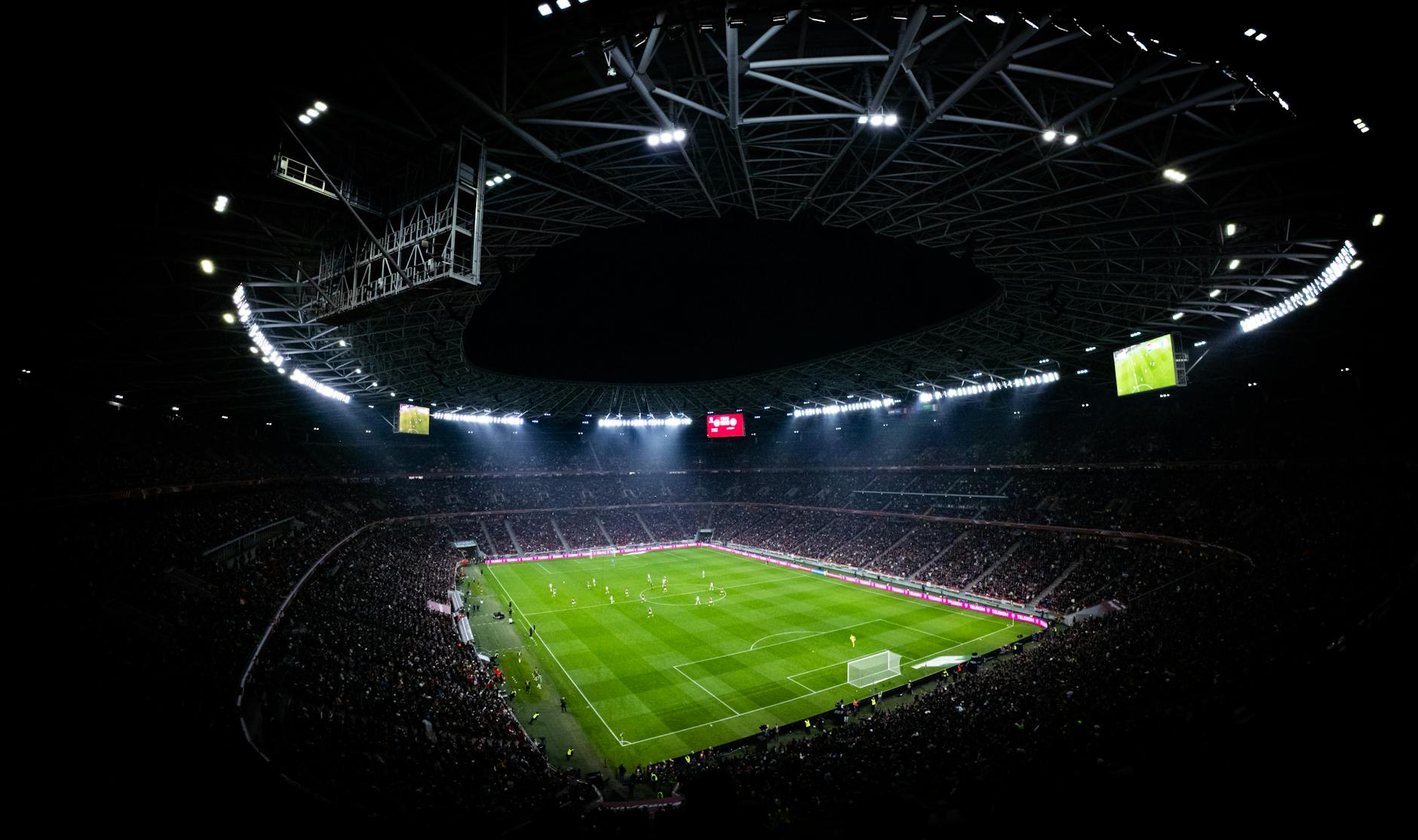
No Seat at the Table? He Built the Whole Restaurant: How Lamar Hunt Changed American Football Forever
If you watched the Super Bowl this year — the commercials, the halftime show, the whole enormous spectacle of it — you were watching something that only exists because one man got told no.
His name was Lamar Hunt. He was polite, soft-spoken, and famously unpretentious for someone sitting on an oil fortune. He was also, as it turned out, one of the most consequential figures in the history of American sports. Not because he was the loudest voice in the room. Because when they locked him out of the room, he built a better one.
The Rejection That Started Everything
By the late 1950s, the NFL was a tightly controlled club, and getting an expansion franchise meant getting the blessing of the league's existing owners. Lamar Hunt, then in his mid-twenties and looking to bring professional football to Dallas, went through the proper channels. He made his case. He was turned down flat.
The official reasoning varied depending on who was doing the talking. Dallas wasn't the right market. The timing wasn't right. The league wasn't ready to expand. What it really came down to was simpler and older than any of those explanations: the people who controlled the NFL liked their control, and they didn't particularly want new partners, especially young ones from Texas who hadn't paid their dues.
Most people, faced with that wall, would have redirected their energy. Hunt started making phone calls.
He wasn't the only wealthy football fan who'd been frozen out. There were others — in Denver, in Oakland, in Boston, in Buffalo — who wanted in on professional football and couldn't get there through the NFL's front door. Hunt began connecting them. By August of 1959, he had enough committed owners to announce the formation of an entirely new league: the American Football League.
The NFL's response was roughly what you'd expect from an entrenched monopoly watching a new competitor announce itself. They laughed.
The Upstart League Nobody Was Supposed to Take Seriously
The AFL's early years were genuinely rough. Several franchises were financially shaky. Attendance was inconsistent. The league played in second-tier stadiums in some cities, and the television deal — a shared contract with ABC — was modest compared to what the NFL was pulling in. Critics called it a minor league. They called it a flash in the pan. They called it a lot of things that don't bear repeating.
What the critics missed was that Hunt and his fellow AFL owners were doing something structurally different from the NFL, and those structural differences would matter enormously. The AFL shared television revenue equally among all teams — a policy that kept smaller-market franchises viable and gave the whole league a kind of collective stability. They were more aggressive about signing talent, more willing to take chances on players the NFL had passed on, and more open to the idea that pro football could be faster and more exciting.
They also had Lamar Hunt in the room, and Lamar Hunt had a gift that isn't always associated with rich men in powerful positions: he genuinely listened to people. Former colleagues and employees described him consistently as someone who remembered names, who asked questions and meant them, who treated the guy parking the cars with the same basic courtesy he extended to fellow billionaires. In a business built on ego, he was conspicuously short on it.
That temperament turned out to be a competitive advantage. Hunt built coalitions where other men built fiefdoms. He kept fractious owners at the table when the AFL's survival wasn't guaranteed. He was, in the language of modern business, a builder — not just of leagues, but of the trust that makes leagues function.
The Coin That Named the Game
Here's a detail that says something about how Hunt operated: the term "Super Bowl" is his. It came, reportedly, from watching his kids play with a Super Ball — one of those high-bounce rubber toys that were everywhere in the mid-1960s. When the AFL and NFL were negotiating the terms of their championship game, Hunt casually used the phrase in correspondence. It stuck. The league officially resisted the name for years, preferring the more corporate "AFL-NFL Championship Game," but the public latched onto "Super Bowl" and never let go.
Hunt didn't trademark it. Didn't make a fuss about the credit. That was him.
The merger itself, finalized in 1966 and fully implemented by 1970, was a direct consequence of what Hunt had built. The AFL had become too successful, too stable, and too expensive to compete against for the NFL to simply wait out. The bidding wars for college talent were costing both leagues serious money. A merger made financial sense for everyone — but it only happened because Hunt had made the AFL into something the NFL couldn't afford to ignore.
The Super Bowl, which grew from that merger, is now the single most-watched television event in the United States every year. The 2024 game drew over 123 million viewers. The economic footprint of the modern NFL — the franchises, the media rights, the merchandise, the cultural saturation — traces a direct line back to the moment a young man from Dallas got rejected and decided to start over from scratch.
The Quiet Revolutionary
Hunt went on to own the Kansas City Chiefs for the rest of his life, and under his stewardship the franchise became one of the NFL's most storied. He was inducted into the Pro Football Hall of Fame in 1972. The AFC Championship trophy — awarded to the conference he founded — bears his name.
But what's striking, in retrospect, is how little of the Lamar Hunt story fits the standard template of the hard-charging sports mogul. He wasn't a bully. He wasn't a showman. He drove his own car, flew commercial when he could, and was known to show up at Chiefs games and wait in line at the concession stand like any other fan.
The revolution he led was built on stubbornness, coalition, and the refusal to accept that the only path forward was the one other people had already paved. When the NFL said no, he didn't lobby harder or try to buy his way in. He looked at the situation clearly, identified what he actually wanted — which was pro football, not NFL membership specifically — and found a different route to it.
That's the part of the story worth sitting with. Not just the outcome, but the logic. The door was closed. He didn't stand there knocking. He went around the building, found an empty lot, and started laying a foundation.
Some people wait their whole lives for permission. Lamar Hunt never seemed to need it.