She Lost Everything in the Dust Bowl — Then Taught America How to Feed Itself
When the Earth Turned to Powder
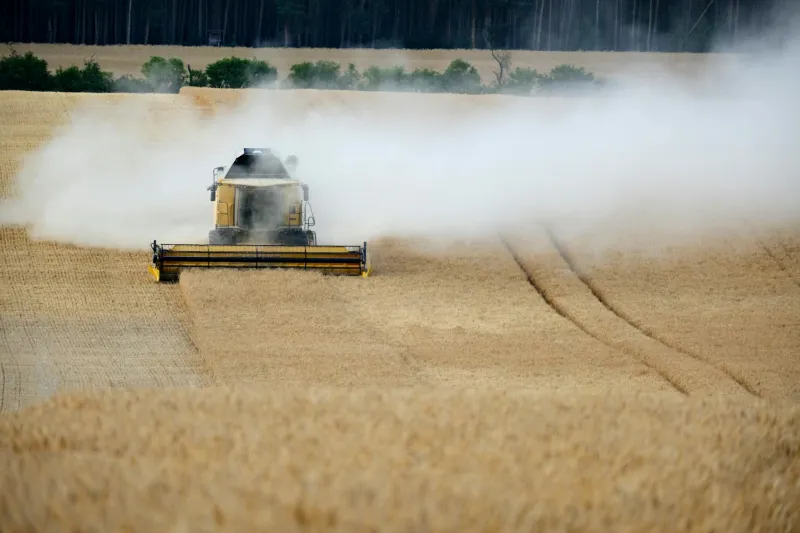
The morning Margaret Williams stepped outside her farmhouse in Cimarron County, Oklahoma, she couldn't see her own barn through the wall of dust. It was April 1935, and what locals called "Black Sunday" had arrived with the fury of a biblical plague. The topsoil that had nurtured wheat for decades was now airborne, choking livestock and burying fence posts whole.
For Margaret, watching her family's 160-acre farm disappear grain by grain, this wasn't just another dust storm. It was the moment that would transform her from a struggling farm wife into one of America's most influential—yet forgotten—agricultural pioneers.
The Making of a Crisis
The Williams family had arrived in Oklahoma during the land rush of 1901, full of hope and government promises about fertile soil. Margaret's husband Frank had plowed every available acre, following the conventional wisdom of the time: more land under cultivation meant more prosperity. They weren't alone—millions of acres across the Great Plains had been stripped of their native grasses and planted with wheat.
Nobody anticipated what would happen when the rains stopped.
By 1934, the combination of severe drought and decades of aggressive plowing had created an environmental disaster. The deep-rooted prairie grasses that had held the soil in place for millennia were gone, replaced by shallow wheat roots that offered no protection when the winds came.
Margaret watched neighbors pack their belongings and head west, joining the stream of "Okies" fleeing to California. But she refused to abandon the land that had been her life's work.
Learning from the Land
While government officials in Washington debated policy responses, Margaret was conducting her own experiments in the ruined fields behind her house. She noticed that areas where prairie grass still grew—around fence lines, in forgotten corners—the soil stayed put even during the worst storms.
Working with whatever seeds she could find, Margaret began replanting native grasses in strategic strips across her property. She convinced Frank to leave stubble in the fields after harvest instead of burning it clean. When neighbors questioned these unconventional methods, Margaret pointed to the results: her soil stayed on her land.
Word of her success spread through the farming community like wildfire. Desperate neighbors started showing up at her kitchen table, asking for advice. Margaret found herself teaching techniques she was still learning herself—contour plowing to follow the natural curves of the land, crop rotation to restore nutrients, windbreaks to slow the devastating winds.
The Extension Program Nobody Wanted to Fund
In 1936, the newly formed Soil Conservation Service took notice of Margaret's work. They offered her a position as a county extension agent—a job that came with almost no budget, no office, and plenty of skepticism from male farmers who weren't sure they wanted agricultural advice from a woman.
Margaret didn't let that stop her. She loaded demonstration materials into the back of her pickup truck and drove from farm to farm, teaching soil conservation techniques to anyone willing to listen. She organized meetings in church basements and grange halls, often paying for materials out of her own pocket.
Her message was simple but revolutionary: work with the land, not against it. Stop thinking of soil as something to conquer and start treating it as something to nurture.
Building a Movement, One Farm at a Time
Over the next decade, Margaret trained thousands of farmers across Oklahoma, Kansas, and Texas. Her techniques—which combined traditional Native American agricultural wisdom with emerging scientific research—gradually became standard practice across the Great Plains.
She developed educational programs that reached farm wives as well as their husbands, recognizing that women often made crucial decisions about kitchen gardens and livestock management. Margaret created demonstration plots that showed the dramatic difference between conservation farming and conventional methods.
By the 1940s, farmers using Margaret's techniques were reporting not just reduced soil erosion, but improved crop yields and better resistance to drought. The methods she had developed in desperation were proving to be more productive than the practices that had caused the Dust Bowl in the first place.
The Legacy Nobody Remembers
Margaret Williams never wrote a bestselling book or received a prestigious award. She worked largely outside academic circles and government bureaucracies, focusing on practical solutions for working farmers. When she retired in 1952, her contributions were acknowledged in a brief newspaper article and a small ceremony at the county courthouse.
But her influence lived on in every farm that practiced contour plowing, every field planted with cover crops, every windbreak that protected precious topsoil from erosion. The soil conservation techniques Margaret pioneered during the Dust Bowl became the foundation of modern sustainable agriculture.
Today, as climate change brings new challenges to American farming, Margaret's core insight remains as relevant as ever: the secret to feeding a nation isn't conquering the land—it's learning to work with it.
The Dust That Settled Into Wisdom
In the end, Margaret Williams proved that sometimes the most important innovations come not from universities or government agencies, but from ordinary people facing extraordinary circumstances. She lost everything in the Dust Bowl—her crops, her financial security, her faith in conventional farming wisdom.
What she gained was something far more valuable: the knowledge of how to heal wounded land and the determination to share that knowledge with anyone who needed it. In teaching America how to feed itself sustainably, Margaret transformed personal disaster into national salvation, one farm at a time.