The Student Who Couldn't Sit Still
In 1908, Clarence Birdseye walked away from Amherst College with nothing to show for his time except unpaid bills and disappointed professors. While his classmates buried themselves in textbooks, Birdseye had spent his days catching rats in dormitory basements and selling them to a genetics professor for pocket change. College, it seemed, just wasn't built for someone whose curiosity couldn't be contained by lecture halls.
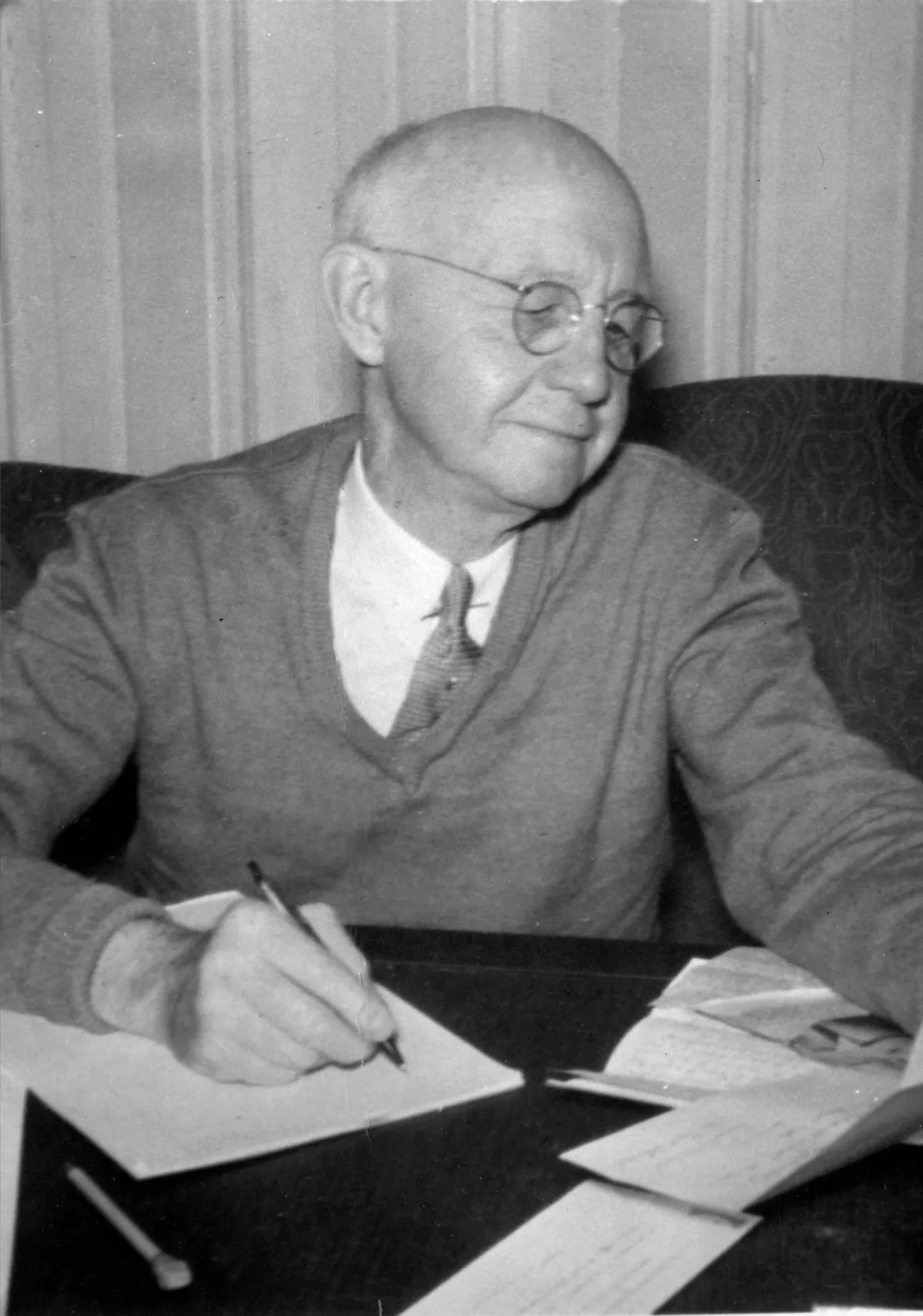 Photo: Clarence Birdseye, via timeline.sawyerfreelibrary.org
Most parents would have been mortified. Most young men would have slunk home in shame. But Birdseye saw his academic failure as liberation. The world beyond campus walls was calling, and he was finally free to answer.
When Failure Opens Doors
What happened next reads like the plot of an adventure novel. Birdseye landed a job with the U.S. Biological Survey, trapping animals and collecting specimens across the American frontier. For someone who'd spent his college years feeling caged, the wilderness felt like coming home. He worked his way from the deserts of New Mexico to the forests of Montana, learning to read animal behavior, master harsh environments, and survive on his wits alone.
But it was a posting to Labrador in 1912 that would change everything. Sent to trade fur with the Inuit people, Birdseye found himself in one of the most unforgiving environments on Earth. Temperatures plunged to 40 below zero. Food spoiled within hours unless properly preserved. For most outsiders, Labrador was a place to endure and escape. For Birdseye, it became the greatest classroom he'd ever known.
Lessons Written in Ice
The Inuit hunters had been solving the preservation problem for centuries, and Birdseye watched their methods with the fascination of a born inventor. When they caught fish through holes in the ice, the Arctic wind would freeze them solid within minutes. But this wasn't ordinary freezing—the intense cold created tiny ice crystals that didn't damage the fish's cellular structure. Months later, when thawed, the fish tasted as fresh as the day it was caught.
Most people would have filed this away as an interesting survival technique. Birdseye saw something else entirely: a technology that could revolutionize how Americans ate.
The Long Road Home
Returning to the United States in 1917, Birdseye faced a problem that would have discouraged most inventors. He understood the principle behind flash-freezing, but translating Arctic conditions into industrial process seemed impossible. Early experiments in his kitchen yielded mixed results—some foods emerged beautifully preserved, others turned to mush.
For years, he tinkered and tested, driven by the memory of those perfectly preserved Arctic fish. He tried different temperatures, various freezing speeds, and countless packaging methods. Friends and family began to wonder if the wilderness had addled his brain. Who was going to buy frozen food when fresh was available? Americans had never shown interest in anything but canned or dried provisions.
The Breakthrough That Changed Everything
The answer came in 1924, when Birdseye finally cracked the code. Using a system of metal plates and high-pressure contact freezing, he could replicate the rapid freezing he'd witnessed in Labrador. The key was speed—freezing food so quickly that ice crystals never had time to grow large enough to damage cellular walls.
But technical success was only half the battle. Convincing Americans to embrace frozen food required changing fundamental assumptions about freshness, nutrition, and convenience. Grocery stores needed new equipment. Home kitchens needed better freezers. An entire supply chain had to be built from scratch.
Building an Industry from Nothing
What followed was a masterclass in persistence. Birdseye founded General Seafood Corporation in 1924, then spent years perfecting his processes and convincing skeptical retailers to take a chance on his products. The breakthrough came in 1929, when the Postum Company (later General Foods) bought his company for $22 million—a fortune that would be worth hundreds of millions today.
But even then, success wasn't guaranteed. The first Birds Eye frozen foods hit grocery stores in 1930, right as the Great Depression was devastating American families. Frozen vegetables cost more than fresh ones, and many consumers remained suspicious of the new technology. It took World War II, when fresh produce became scarce and women entered the workforce in unprecedented numbers, for frozen foods to finally find their market.
The Wilderness Student's Legacy
By the 1950s, frozen food had become a cornerstone of American life. TV dinners revolutionized family meals. Frozen vegetables made nutrition accessible year-round. Ice cream transformed from a special occasion treat to an everyday indulgence. The college dropout who couldn't sit still had accidentally invented the convenience food industry.
Birdseye never stopped innovating. He went on to develop infrared heat lamps, reflective insulation, and even a method for removing water from foods. But his greatest achievement remained that first flash of insight in the Arctic wilderness—the recognition that nature had already solved the preservation puzzle, and all he had to do was learn to listen.
When Wandering Becomes Wisdom
Today, as we stand in grocery store freezer aisles that stretch the length of football fields, it's worth remembering where it all started. Not in a corporate laboratory or university research facility, but in the mind of a restless young man who saw failure as freedom and treated the world as his classroom.
Clarence Birdseye's story reminds us that sometimes the most revolutionary ideas come from the most unexpected places. His path from academic dropout to industry pioneer proves that there's no single route to innovation—and that the students who can't sit still might just be the ones destined to change the world.